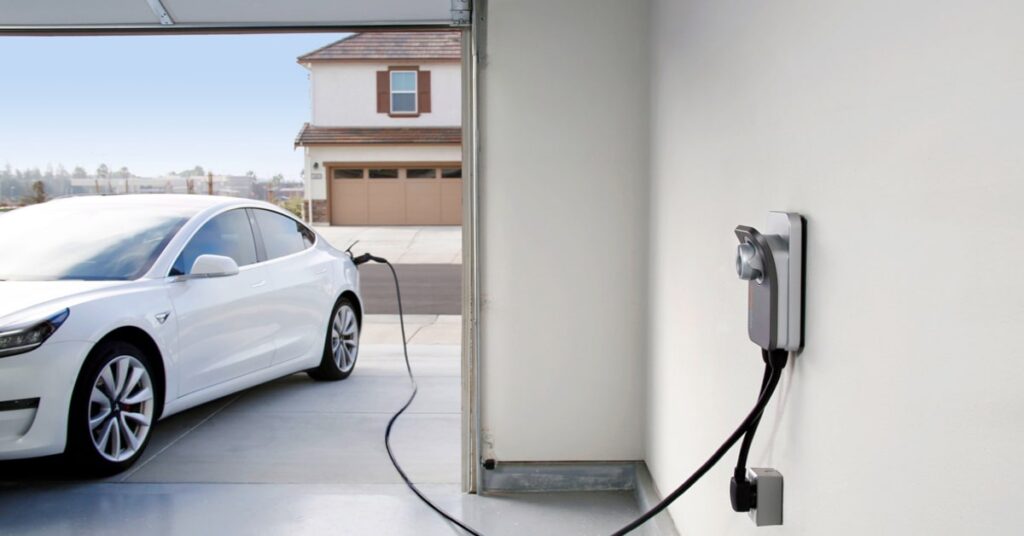
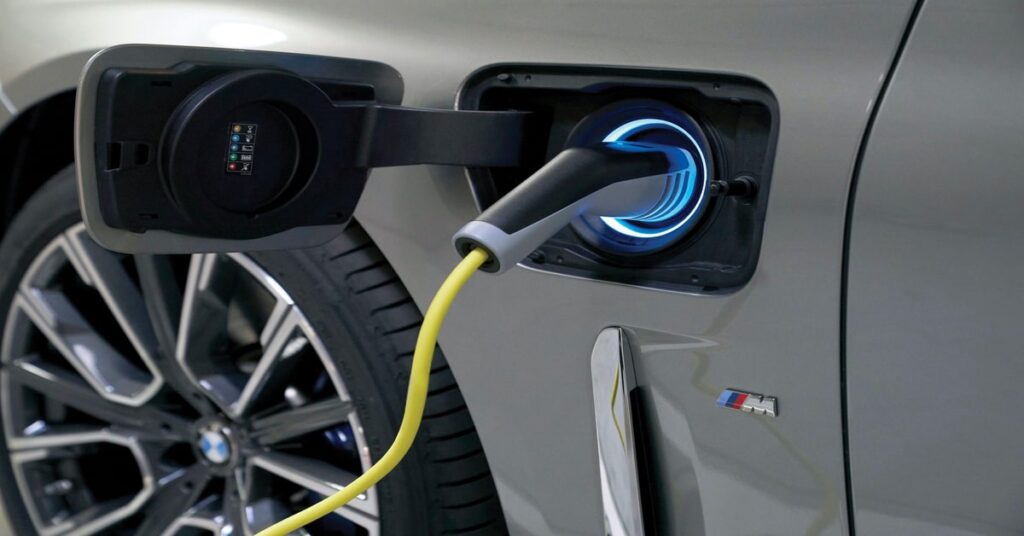
Installing an electric vehicle charger at home requires more than choosing the right charging device. You need a suitable electrical supply, properly sized wiring, circuit protection, and a safe connection point. AL Emtyaz is an EV charger installation company in Jordan providing professional electric car charger setup, electrical preparation, installation, and testing for homes and other properties in Amman and across Jordan.
Our team helps EV owners choose a suitable charging solution based on their vehicle, parking location, electrical capacity, and daily charging requirements. We handle the essential stages of home EV charger installation, from assessing the electrical supply and preparing the charging point to connecting the charger and verifying its operation.
In addition to installation, AL Emtyaz supplies electric vehicle charging equipment, including Sigma chargers. For a broader overview of available products, home charging solutions, and commercial charging station projects, explore our EV charger sales and installation services in Jordan.
Whether you already own a charger or need a complete solution that includes the charging unit and installation, we can help you assess the requirements and arrange the work.
Contact AL Emtyaz for EV charger installation in Jordan. Call 0798495491 to request an installation quotation or discuss the electrical requirements of your home charging point.
You can also contact us directly through WhatsApp using the button below.
EV Charger Installation Company in Jordan for Homes and Businesses
As electric vehicles become more common in Jordan, having convenient access to reliable charging equipment is increasingly important. Many EV owners prefer installing a dedicated charging point at home instead of depending entirely on public charging stations.
AL Emtyaz provides electric car charger installation services in Amman and Jordan, helping customers prepare suitable charging locations and connect compatible EV charging equipment.
Our installation process considers the electrical infrastructure, charger specifications, available power, cable routing, circuit protection, and vehicle charging requirements.
Our EV charger setup and installation services include:
- Home EV charger installation: Installing suitable AC charging equipment in houses, villas, and residential parking areas.
- EV charging point preparation: Assessing and preparing the electrical connections required for a dedicated charging location.
- Electrical wiring for EV chargers: Planning and installing appropriately rated cables and electrical connections.
- Wall-mounted charger installation: Mounting compatible EV wall chargers in suitable locations.
- Portable EV charger setup: Assessing electrical supply suitability for compatible portable charging equipment.
- Level 2 EV charger installation: Preparing and connecting AC charging equipment suitable for residential and selected commercial applications.
- EV charger inspection and testing: Checking electrical connections, protective devices, and charger operation after installation.
We can also assess an EV charger that you have purchased separately. If the charger is compatible with the vehicle and electrical installation, our team can discuss the requirements for connecting and testing it.
Sigma Level 2 EV Charger for Home Charging in Jordan
AL Emtyaz offers the Sigma Level 2 EV charger as a practical charging option for electric vehicle owners who need adjustable charging current, convenient everyday operation, and a competitive purchase price.
The Sigma charger described in our product offering supports charging current settings of up to 32 amperes, making it suitable for compatible electric vehicles and electrical installations.
Before installation, the available electrical supply and vehicle charging capabilities must be checked to determine the appropriate charging current and connection method.
Sigma EV Charger Technical Specifications
Key features of the Sigma charger include:
- Charger category: Level 2 AC electric vehicle charging equipment.
- Maximum charging current: Up to 32A, subject to charger specifications and the electrical supply.
- Adjustable current settings: 10A, 16A, 20A, 24A, and 32A.
- Charging cable: A 5-meter cable designed to provide convenient access between the charging unit and the vehicle.
- Digital display: A color information screen showing relevant charging information and operating status.
- Delayed charging timer: A scheduling feature that allows users to delay the start of charging.
- Safety functions: Built-in monitoring and protective functions described in the product specifications.
- Warranty: A one-year product warranty against covered manufacturing defects, according to the applicable warranty terms.
On a compatible single-phase electrical supply of approximately 230V, a 32A charger can provide a theoretical power level of around 7.4 kW. Actual charging performance depends on the charger, electrical installation, vehicle’s onboard charger, and charging conditions.
The charger’s connector version and exact electrical specifications should be confirmed before ordering to ensure compatibility with your vehicle.
Adjustable Charging Current for Different Electrical Conditions
One of the useful features of the Sigma charger is its adjustable charging current. Users can select from several current levels, including 10A, 16A, 20A, 24A, and 32A, depending on the available electrical capacity.
This flexibility can be particularly helpful when the electrical installation has different operating limitations or when charging speed needs to be adjusted.
However, the selected charging current must never exceed the safe continuous capacity of the electrical circuit, wiring, outlet, or protective devices. The appropriate settings should be determined after evaluating the installation.
Sigma Charger Safety and Protection Features
The Sigma charger is described as incorporating multiple safety and monitoring features designed to help detect abnormal operating conditions.
The advertised protection functions include:
- Overcurrent protection.
- Overtemperature protection.
- Short-circuit protection.
- Electrical leakage or residual-current monitoring.
- Overvoltage and undervoltage protection.
- Electrical surge protection and operational self-check functions.
- Automatic shutdown under certain abnormal operating conditions.
The available protection functions and their technical ratings should be verified against the documentation for the exact charger model. Built-in charger protection does not replace the need for suitable external circuit protection, grounding, and professional electrical installation.
Sigma EV Charger Price in Jordan
AL Emtyaz has advertised the Sigma 32A Level 2 EV charger at JOD 140, with a one-year product warranty and a free delivery offer.
Please contact us to confirm the current product price, stock availability, delivery coverage, and warranty conditions before placing an order.
Important: The advertised charger purchase price is separate from any electrical installation work unless installation is expressly included in your quotation. Installation costs depend on the electrical supply, cable length, protective devices, and required preparation.
To order a Sigma electric car charger or request information about installation, call 0798495491.
Benefits of Installing an Electric Car Charger at Home
Professional home EV charger installation in Jordan can make everyday electric vehicle ownership more convenient. Having a suitable charging point near your parking space allows you to charge according to your own schedule rather than relying exclusively on public charging stations.
Key benefits of home electric vehicle charging include:
- Convenient charging at home: Connect your electric vehicle while it is parked at your property, reducing the need for frequent visits to public charging stations.
- Potential charging cost savings: Home charging may cost less than some public charging options, depending on your electricity tariff and the prices charged by public stations.
- Overnight charging: A suitable home charging system can allow you to recharge your EV during the night, depending on battery capacity and available charging power.
- Greater control: Compatible chargers allow you to manage charging schedules and, in some cases, adjust the charging current.
- Less dependence on public chargers: A dedicated home charging point gives you an additional charging option for daily driving needs.
- Dedicated electrical infrastructure: A properly designed charging circuit can provide a more suitable arrangement for regular EV charging than an improvised electrical connection.
Before choosing a home charging system, it is important to check your vehicle’s charging connector, onboard AC charging capacity, battery requirements, and the electrical capacity available at your property.
Types of Electric Vehicle Chargers Available in Jordan
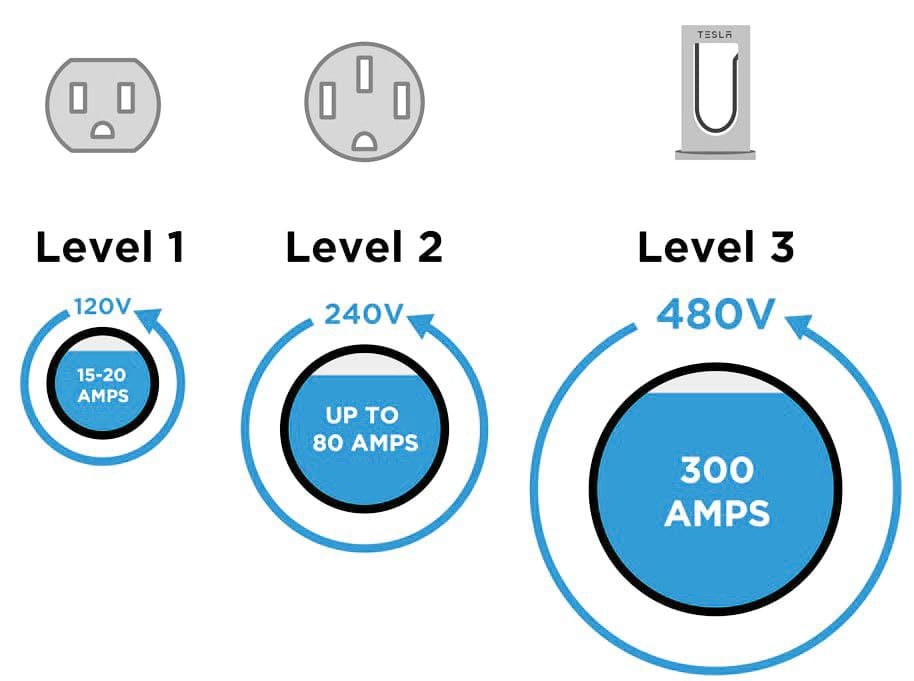
Electric vehicle chargers differ in their electrical requirements, charging power, connector types, and intended applications. Understanding these differences is important when planning electric car charging point installation for a home or commercial property.
Charging equipment is commonly discussed in three categories: Level 1 AC charging, Level 2 AC charging, and DC fast charging. These categories describe different charging technologies and operating conditions.
Level 1 EV Chargers: Standard 120V AC Charging
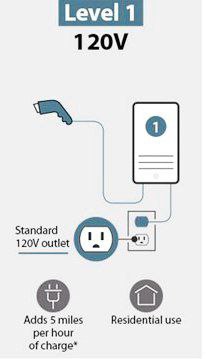
Level 1 EV charging generally refers to AC charging through a standard 120V electrical supply, as commonly used in North America.
This charging method provides relatively low charging power and may require a long time to recharge an electric vehicle with a large battery.
Level 1 charging is not normally the primary classification used for typical 220–240V residential charging arrangements in Jordan. EV owners should choose charging equipment that matches the local electrical supply and their vehicle’s specifications.
Level 2 EV Chargers: Home and Workplace AC Charging
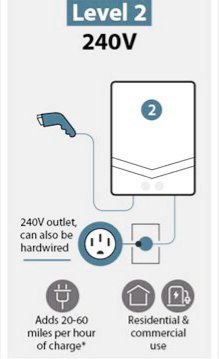
Level 2 EV chargers use AC electricity and are commonly installed in homes, workplaces, residential parking areas, and selected commercial locations.
Many residential AC chargers operate on approximately 220–240V supplies, with charging current options that may include 16A and 32A, depending on the equipment and electrical installation.
A Level 2 charger generally provides faster charging than low-power Level 1 equipment and is often a practical option for overnight home charging.
Charging duration depends on several factors, including battery capacity, initial battery charge, charger output, and the vehicle’s onboard AC charging limit.
For many homes in Jordan, a properly installed Level 2 electric car charger can provide a convenient balance between charging performance, electrical requirements, and everyday usability.
DC Fast Chargers for Commercial Charging Stations
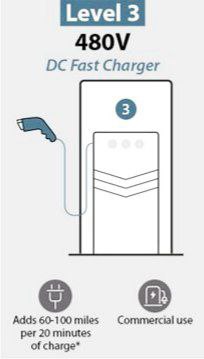
DC fast charging equipment, sometimes described as Level 3 charging, supplies direct current to compatible electric vehicles and can deliver substantially higher charging power than typical residential AC chargers.
DC fast chargers are commonly associated with public charging stations, highway charging facilities, and commercial infrastructure projects.
Some DC fast charging systems can deliver significant battery charging within a relatively short period. However, actual charging time depends on the vehicle, battery temperature, state of charge, charging power, and battery management system.
Installing a DC fast charger generally requires more extensive electrical infrastructure, sufficient available power, appropriate protection, and consideration of applicable regulatory requirements.
Important distinction: A 22 kW three-phase AC charger is not automatically a DC fast charger. AC charging and DC fast charging use different electrical architectures, even when both provide higher power than a standard residential charging point.
For most residential applications, AL Emtyaz recommends evaluating a suitable AC home charging solution before considering more complex charging infrastructure.
EV Charger Electrical Setup and Installation Steps in Jordan
A safe and effective electric vehicle charger installation requires proper planning, a suitable electrical connection, and installation procedures appropriate for the charger and building.
Before beginning the work, our team considers the vehicle’s charging requirements, charger specifications, available electrical supply, and the intended parking location.
The EV charging point installation process generally includes the following stages:
1. Choosing the EV Charger Installation Location
The first step is selecting a suitable charging location near the vehicle’s regular parking space.
The location should allow convenient cable access to the vehicle while considering parking movement, cable routing, physical protection, ventilation requirements, and exposure to outdoor conditions.
Wall-mounted chargers should be installed according to the manufacturer’s mounting instructions and environmental requirements.
2. Checking the Electrical Supply and Available Capacity
Before connecting a home EV charger, the electrical supply must be assessed to determine whether it can safely support the expected charging load.
This assessment may include reviewing the main electrical panel, existing circuits, available supply capacity, grounding system, and any additional electrical demand from household appliances.
Where the available capacity is limited, the charging current may need to be restricted, or additional electrical work may be required.
3. Preparing Electrical Wiring and Circuit Protection
EV charger electrical wiring must be selected according to the charger’s operating current, cable length, installation method, conductor material, environmental conditions, and applicable electrical requirements.
The installation may require a dedicated circuit, appropriately rated circuit breaker, suitable residual-current protection, grounding, and other protective measures specified for the charging equipment.
Cable sizing should be calculated for the actual installation rather than assuming that one conductor size is suitable for every charger or property.
4. Mounting and Connecting the Charging Unit
After the electrical preparation is completed, the charging unit is mounted at the selected location and connected according to the manufacturer’s instructions.
The installation team checks the cable connections, mounting arrangement, charger settings, and required electrical protection before operation.
5. Testing the EV Charging Point
Once installation is completed, the charging point is inspected and tested before being placed into regular use.
Testing may include checking the electrical connections, protective arrangements, grounding, charger status, and charging operation with a compatible vehicle or suitable test equipment.
The objective is to confirm that the charging system has been installed according to the selected design, equipment instructions, and applicable requirements.
Electrical Requirements for Installing a Home EV Charger
Every property has a different electrical installation. For that reason, home electric car charger setup should begin with an assessment of the existing electrical system rather than simply connecting a charger to the nearest available outlet.
Important requirements to review before installation include:
- Electrical service capacity: The available power and current that can be safely allocated to EV charging.
- Single-phase or three-phase supply: The electrical configuration available at the property and the requirements of the selected charger.
- Dedicated wiring: Suitable cables and installation methods for the expected continuous charging load.
- Circuit protection: Appropriately selected protective devices according to the charger specifications and electrical requirements.
- Grounding and electrical safety: Verification that the installation has suitable earthing and protective arrangements.
- Parking location: The distance between the electrical supply and the vehicle charging position.
- Vehicle compatibility: The charging connector, onboard charging capacity, and supported AC charging modes.
- Environmental suitability: Choosing equipment suitable for indoor or outdoor installation, including the required environmental protection rating.
For multi-unit residential buildings or shared parking areas, installation may also require coordination with the property owner or building management and confirmation of any applicable permissions.
AL Emtyaz can review the requirements of your charging location and help determine an appropriate installation approach.
Wall-Mounted and Portable EV Charger Installation
Electric vehicle charging equipment is available in different designs, including wall-mounted charging units and portable chargers. The appropriate option depends on your parking arrangements, electrical installation, vehicle compatibility, and daily charging requirements.
Wall-Mounted EV Charger Installation
Wall-mounted EV chargers, often called wallbox chargers, provide a permanent charging point in a garage, driveway, or designated parking area.
A wall-mounted installation can offer convenient cable access and a dedicated location for regular charging. Proper electrical preparation and secure mounting are essential for safe operation.
Portable Electric Car Charger Setup
Portable EV chargers can provide additional flexibility, but they still require a compatible and appropriately rated electrical connection.
Before using portable charging equipment, the electrical circuit and outlet should be assessed for their suitability for continuous EV charging.
Ordinary household extensions, unsuitable adapters, and unverified electrical connections should not be used as substitutes for an appropriately designed charging arrangement.
AL Emtyaz can help customers evaluate whether a portable or fixed charging solution is more appropriate for their property.
EV Charger Brands and Equipment Options
Electric vehicle charging equipment is available from multiple international manufacturers, with different charging capacities, connector configurations, control features, and installation requirements.
Examples of brands in the wider EV charger market include Sigma, Alpha, Zencar, Bensen, Teison, and Wallbox.
Current product offering: The charger specifically identified as available through AL Emtyaz is the Sigma EV charger. The other brands mentioned above are not presented as currently available for purchase from our company.
If you already own an electric vehicle charger from another manufacturer, contact our team with the charger model and specifications so we can evaluate the installation requirements.
Before selecting any charger, we recommend checking the following details:
- Charger power rating and maximum current.
- Compatible vehicle charging connector.
- Single-phase or three-phase electrical requirements.
- Manufacturer installation instructions.
- Product safety documentation and applicable certifications.
- Warranty conditions and technical support availability.
EV Charger Safety Features and Installation Quality
Safety is one of the most important considerations when choosing an EV charger installation company. Charging equipment can operate for extended periods, making the electrical supply and protective arrangements especially important.
AL Emtyaz considers charger suitability, electrical protection, wiring requirements, and operating conditions as part of the installation process.
Important charger and installation safety considerations include:
- Using electrical cables and connectors rated for the expected charging load.
- Installing suitable circuit breakers and residual-current protection where required.
- Checking grounding and electrical connections.
- Using appropriately rated electrical enclosures for the installation environment.
- Ensuring that the selected charger is compatible with the available electrical supply.
- Following the manufacturer’s installation and operating instructions.
- Testing the charging point before regular operation.
For outdoor installation, the charger’s environmental protection rating should be suitable for the expected exposure to rain, dust, sunlight, and other site conditions.
It is also important to verify the actual technical specifications and certifications of the selected charger rather than assuming that all charging products provide the same safety functions.
Electric Vehicle Charger Maintenance and Troubleshooting in Jordan
In addition to charger installation, AL Emtyaz provides services related to EV charger maintenance and troubleshooting in Jordan.
Regular inspection and appropriate maintenance can help identify damaged components, connection problems, and charger faults before they affect charging performance.
Our EV charger maintenance services may include:
- Charger fault diagnosis: Identifying charging interruptions, error messages, and equipment malfunctions.
- Electrical connection inspection: Checking relevant connections and protective components for visible damage or abnormal conditions.
- Software and configuration checks: Reviewing charger settings and applicable software updates where supported by the manufacturer.
- Damaged component replacement: Assessing the need to replace defective parts with compatible components.
- Cleaning and general inspection: Reviewing the external condition of the charging unit and checking for signs of wear or damage.
- Charging performance checks: Verifying basic charger operation and connection with a compatible electric vehicle.
Repair options, software access, and replacement part availability depend on the charger brand, model, and manufacturer support.
If your charger displays an error, interrupts charging, overheats, or shows signs of electrical damage, stop using it and contact a qualified technician for inspection.
EV Charger Installation Cost in Jordan
The cost of installing an EV charger in Jordan depends on the selected charger and the electrical work required at the property.
Installing a charging point near an appropriately rated electrical supply may require less work than an installation that needs additional wiring, electrical panel modifications, or a longer cable route.
The main factors affecting EV charger installation prices include:
- Charger brand and model: Different charging devices have different purchase prices, technical features, and installation requirements.
- Charging current and power: A 16A charger and a 32A charger may require different electrical arrangements.
- Distance from the electrical panel: Longer wiring routes may increase the amount of cable, protective conduit, and labor required.
- Existing electrical capacity: A property with sufficient available capacity may require less preparatory work than one requiring electrical modifications.
- Circuit protection: The required breakers, residual-current protection, and related electrical equipment affect installation costs.
- Installation location: Indoor garages, outdoor parking spaces, and shared residential parking areas may require different mounting and protection arrangements.
- Additional electrical work: Any required panel upgrades, cable routing, or electrical infrastructure preparation may increase the total cost.
- Project location: Travel and site arrangements may affect the quotation for installations outside Amman.
Does the EV Charger Price Include Installation?
The purchase price of an electric vehicle charger should not automatically be treated as the total cost of a completed installation.
For example, the Sigma charger has been advertised at JOD 140, while the electrical installation cost depends on the work required at your property.
AL Emtyaz can provide a quotation based on the selected charger, existing electrical conditions, and installation requirements.
Request your EV charger installation quotation: Call 0798495491 to discuss the charger, parking location, and electrical setup.
Why Choose AL Emtyaz for EV Charger Installation in Jordan?
Choosing the right electric vehicle charger installation company in Jordan means finding a service provider that considers both charging equipment and the electrical infrastructure needed for safe operation.
AL Emtyaz offers coordinated EV charger installation services, helping customers move from charger selection and electrical preparation to installation and testing.
Our service advantages include:
- Charger selection assistance: Helping EV owners identify suitable charging equipment for their vehicles and electrical supply.
- Electrical installation planning: Reviewing available capacity, wiring routes, charger location, and circuit protection requirements.
- Home charging solutions: Installing compatible charging points for residential garages, driveways, and parking areas.
- Sigma charging equipment: Providing information about available Sigma chargers and their features.
- Customer-owned charger installation: Assessing suitable chargers purchased separately by the property owner.
- Inspection and testing: Reviewing the completed installation and verifying charging operation.
- Maintenance support: Providing charger inspection and troubleshooting services according to equipment requirements.
- Service coverage in Jordan: Arranging installation services in Amman and other locations according to project requirements and availability.
Our goal is to provide a practical charging arrangement that matches the customer’s vehicle, property conditions, and everyday charging needs.
Frequently Asked Questions About EV Charger Installation in Jordan
Can I install an EV charger at home in Jordan?
Yes. Home EV charger installation is possible when the property has a suitable electrical supply, an appropriate charging location, and the required electrical protection. The installation should be assessed and completed by qualified personnel, taking into account applicable requirements.
What is the best EV charger for home installation?
For many homes, a compatible Level 2 AC charger is a practical choice because it offers convenient charging performance without requiring the extensive infrastructure associated with DC fast charging. The best option depends on your vehicle, electrical capacity, connector type, and charging requirements.
How much does EV charger installation cost in Jordan?
Installation costs vary according to charger power, cable length, electrical panel capacity, circuit protection, installation location, and additional electrical work. Contact AL Emtyaz at 0798495491 to request a quotation based on your property.
Can you install a charger that I already purchased?
Yes. AL Emtyaz can assess a customer-owned EV charger and discuss installation requirements. We need to check the charger model, electrical specifications, vehicle compatibility, and available supply before proceeding.
Does a 32A home EV charger require special wiring?
A 32A EV charger requires electrical wiring, circuit protection, and connections suitable for its expected continuous load. The correct cable size and installation arrangement depend on the electrical design, cable length, installation conditions, and applicable requirements.
How long does it take to charge an electric car at home?
Charging time depends on battery capacity, the battery’s initial state of charge, charger power, and the vehicle’s onboard AC charging limit. A Level 2 charger can often support convenient overnight charging, but the exact duration varies between vehicles.
Is the Sigma 32A charger compatible with every electric vehicle?
Compatibility depends on the charger’s connector version, the vehicle’s charging inlet, supported charging standards, and electrical requirements. Before ordering, provide your vehicle make and model so the appropriate charger configuration can be checked.
Can a DC fast charger be installed at home?
DC fast charging equipment generally requires substantially more electrical capacity and infrastructure than typical home AC chargers. It is more commonly used at commercial and public charging facilities. Most homeowners are better served by evaluating a suitable AC charging solution first.
Do I need approval to install an EV charger in Jordan?
Requirements depend on the type of charging installation, its location, and whether it is intended for private or commercial use. Commercial charging stations and certain private charging arrangements may be subject to regulatory requirements. The applicable approvals should be checked with the relevant Jordanian authorities before installation.
Do you provide EV charger installation outside Amman?
AL Emtyaz provides EV charger installation services in Amman and can arrange projects in other areas of Jordan according to location, project requirements, and service availability.
Contact AL Emtyaz for EV Charger Installation in Amman and Jordan
Planning to install an electric car charger at home? AL Emtyaz provides EV charger setup and installation services in Jordan, including electrical preparation, charger mounting, wiring, protective arrangements, and operational testing.
Whether you need a new Sigma charger, want to install equipment you already own, or require a dedicated charging point near your parking space, our team can help you evaluate the technical requirements and arrange the installation.
Request your EV charger installation quotation today. Call 0798495491 to discuss your vehicle, charger specifications, property location, and electrical requirements.
You can also contact AL Emtyaz through WhatsApp using the button below.