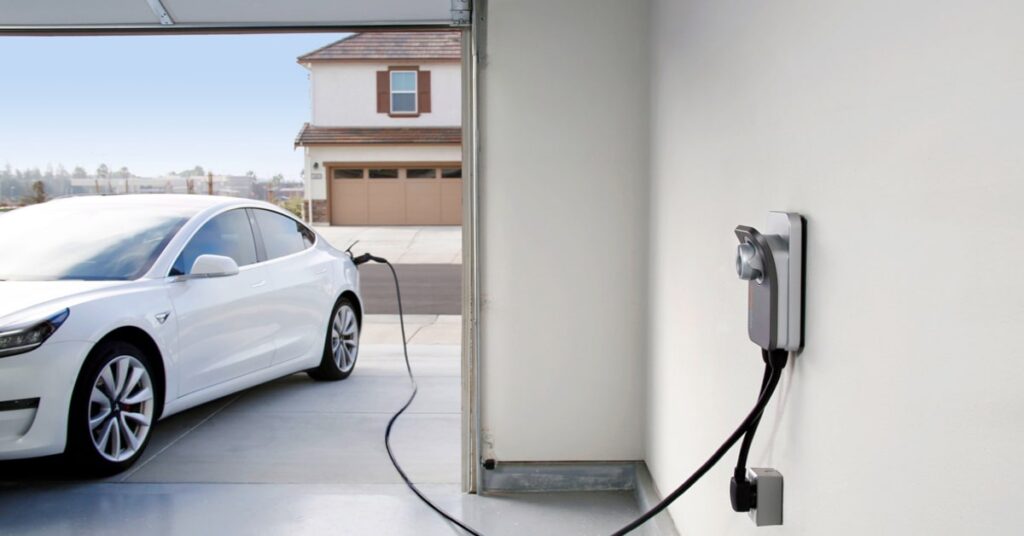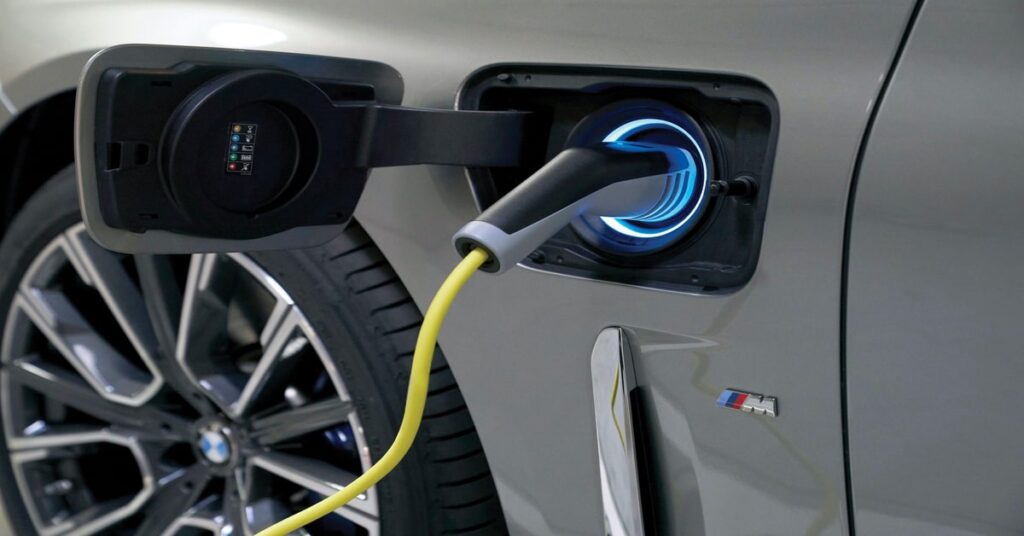

Understanding EV charger types, prices, and specifications in Jordan is essential before buying a home electric car charger, a portable charging cable, or commercial DC fast charging equipment. The right choice depends on your vehicle’s charging port, electrical supply, charging speed requirements, and budget.
At AL Emtyaz Facilities Management, we help electric vehicle owners and businesses compare charging equipment and choose suitable solutions. Our EV charger sales and installation services in Jordan cover home charging, charger supply, electrical installation, and commercial charging station projects.
In this guide, we explain the differences between Level 1, Level 2, and DC fast chargers, compare popular electric car charger brands, review portable chargers, and discuss the features that influence charging performance and equipment prices.
We also introduce the Sigma 32A EV charger, an option for home charging, and explain the technical requirements of commercial chargers from Sigma and BENY for businesses and charging station operators.
Need help choosing an electric car charger in Amman or Jordan? Contact AL Emtyaz at 0798495491 to check charger compatibility, available models, prices, and delivery or installation arrangements.
You can also contact us directly through WhatsApp:
Sigma EV Chargers in Jordan for Home and Commercial Use
Sigma electric vehicle chargers provide charging solutions for individual drivers, businesses, parking facilities, and commercial charging stations. Different Sigma models are designed for different applications, from adjustable AC home chargers to higher-power DC charging equipment.
AL Emtyaz works with Sigma charging solutions to help customers select suitable equipment according to vehicle compatibility, electrical infrastructure, charging requirements, and expected usage.
The home charging range includes the Sigma 32A Level 2 EV charger, while commercial solutions include DC chargers for locations such as fuel stations, shopping centers, hotels, and public parking facilities.
Sigma 32A Level 2 EV Charger for Homes
The Sigma 32A EV charger is designed for everyday AC charging. It offers adjustable charging current settings, allowing users to select a suitable current according to the charger configuration and the electrical supply available at the charging location.
One of its main advantages is the ability to select between 10A, 16A, 20A, 24A, and 32A, subject to the supported model and the electrical installation’s safe operating limits.
This flexibility can be useful when a property has a limited electrical capacity or when the charging current needs to be adjusted to suit the installation.
At a nominal 230V single-phase supply, a 32A charging current corresponds to approximately 7.36 kW of electrical power. The actual power delivered to the vehicle may be lower because of the onboard charger, electrical limits, and vehicle settings.
Sigma 32A EV Charger Features and Specifications
According to the Sigma charger specifications featured in AL Emtyaz’s original offer, the advertised home charging package includes the following features:
- Charging current: Adjustable settings of 10A, 16A, 20A, 24A, and 32A.
- Charging category: Level 2 AC charging equipment.
- Charging cable: An advertised 5-meter cable with a 6 mm² copper conductor specification.
- Safety functions: The original product offer describes eight integrated protection features.
- Display: A color information screen showing charging-related information.
- Charging timer: A delayed-start function for scheduling the beginning of charging.
- Environmental protection: Protection features against specified temperature and environmental conditions, depending on the model.
- Charging connectors: Sigma product options include Type 1, Type 2, GB/T, and Tesla-compatible configurations. The connector must be selected for the actual vehicle.
- Warranty: The AL Emtyaz offer advertises a one-year warranty against qualifying manufacturing defects.
Compatibility note: A Sigma charger should not be assumed to connect directly to every electric vehicle. Charging compatibility depends on the vehicle inlet, connector type, supported electrical supply, and charger model. Any required adapter must be appropriate and approved for the intended use.
Before purchasing, ask for the technical datasheet and confirmation of the supplied connector, protection functions, certification, and warranty conditions.
Sigma 32A EV Charger Price in Jordan
AL Emtyaz has advertised the Sigma Level 2 | 32A EV charger for JOD 140, with a one-year warranty and promotional delivery arrangements.
Advertised Sigma 32A Charger Price: JOD 140 — Confirm Current Availability and Delivery Terms
This is the advertised charger price and should not be assumed to include electrical installation, additional cabling, new circuit breakers, or modifications to the property’s electrical system unless explicitly stated in the current quotation.
To confirm the current Sigma EV charger price in Jordan, call 0798495491.
Sigma and BENY DC Fast Chargers for Commercial Charging Stations
In addition to home AC charging equipment, AL Emtyaz works with Sigma and BENY DC fast charging solutions for commercial and public charging applications.
Commercial DC chargers are designed to deliver higher charging power than typical home AC chargers. They may be suitable for fuel stations, public parking areas, shopping malls, hotels, commercial properties, and dedicated EV charging facilities.
Depending on the available product range, charging station equipment may include:
- Sigma DC chargers: Medium-power charging solutions with configurations in the 30–60 kW range.
- BENY modular DC charging systems: Centralized charging cabinets with advertised total capacities of approximately 360–600 kW, depending on the system configuration.
- Multiple charging outputs: Some centralized systems distribute power among several charging connectors.
- OCPP communication: Selected models support OCPP 1.6J for communication with compatible charging management platforms.
- Connector options: Depending on the model, available configurations may include CCS1, CCS2, CHAdeMO, GB/T, or other supported interfaces.
- Management features: Selected chargers may include touchscreens, remote monitoring, charging authorization, and protection systems.
For BENY split DC charging systems, the original product information refers to a central cabinet capacity of 360–600 kW and output arrangements of approximately 30–40 kW per connector in certain configurations. Actual power allocation depends on the specific equipment and station design.
AL Emtyaz also offers consultation for commercial EV charging station projects in Jordan, including site requirements, charger selection, power availability, technical planning, equipment supply, and installation arrangements.
Our company’s published project portfolio includes EV charging infrastructure work associated with Greater Amman Municipality and the use of Sigma and BENY charging technologies.
Planning a commercial EV charging station? Call 0798495491 to discuss equipment capacities, technical requirements, and a project-specific quotation.
Types of Electric Vehicle Chargers in Jordan
Electric vehicle charging equipment is commonly classified by the electrical supply it uses and the power it can deliver to the vehicle.
The three widely recognized charging categories are Level 1 AC charging, Level 2 AC charging, and DC fast charging, sometimes informally called Level 3 charging.
For drivers in Jordan, it is important to consider the local electrical supply. The typical nominal supply is approximately 230V for single-phase electricity and 400V between phases for suitable three-phase installations.
1. Level 1 EV Chargers: Basic AC Charging
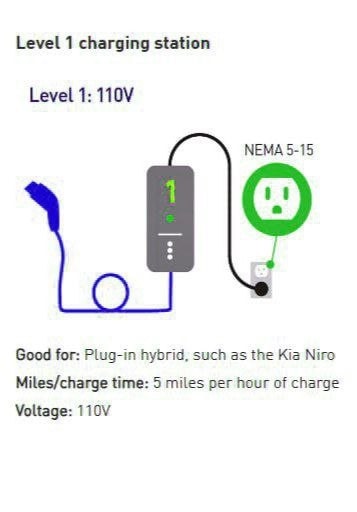
Level 1 EV charging generally refers to low-power AC charging using a standard 120V electrical supply in markets such as the United States.
It is one of the slowest commonly defined charging categories and is typically associated with portable charging equipment supplied with some electric vehicles.
- Electrical supply: Generally 120V AC under the North American Level 1 classification.
- Charging speed: Relatively slow compared with higher-power AC and DC charging systems.
- Typical application: Charging when the vehicle is parked for long periods.
- Range added: Common US reference estimates are approximately 2–5 miles of driving range per hour, depending on the vehicle and electrical supply.
Important for Jordan: Level 1 charging at 120V is not the usual domestic supply arrangement in Jordan. Portable charging equipment must be selected according to the charger’s rated input voltage, the available electrical circuit, and the vehicle connector. A vehicle imported from the United States does not automatically require a 120V charger.
2. Level 2 EV Chargers: Home and Workplace Charging
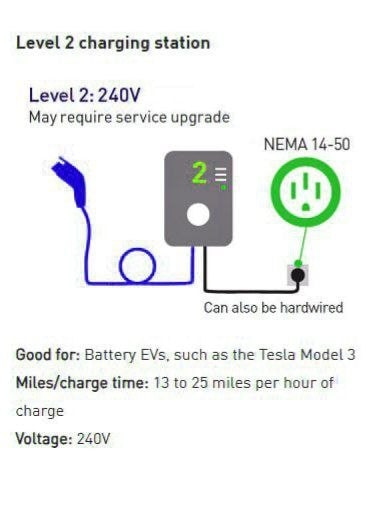
Level 2 EV chargers are commonly used for home, workplace, and destination charging. They operate at higher AC charging power than Level 1 equipment and are suitable for everyday electric vehicle charging when the electrical installation supports the required load.
In Jordan, home AC charging commonly involves equipment designed for the local nominal supply, including suitable 230V single-phase configurations.
Main characteristics of Level 2 EV charging include:
- Electrical supply: Commonly 208–240V AC in North American classifications, with appropriate 230V equipment used in comparable single-phase installations elsewhere.
- Charging current: Available in different ratings, including 16A and 32A models.
- Typical charging power: Approximately 3.7 kW at 230V and 16A, or 7.4 kW at 230V and 32A, before considering operating limitations.
- Installation: Requires a correctly rated electrical circuit, protective devices, suitable wiring, and electrical safety checks.
- Applications: Private homes, residential parking spaces, businesses, and workplace parking facilities.
- Charging time: Depends on the vehicle’s battery capacity and onboard AC charging limit.
Some AC charging systems also support three-phase electricity and higher charging power, such as approximately 11 kW or 22 kW, when the vehicle, charger, and electrical installation are compatible.
For many drivers who charge overnight, a suitable 32A home EV charger can be a practical option, provided the electrical supply and vehicle support the requested current.
3. DC Fast Chargers: Commercial and Public EV Charging
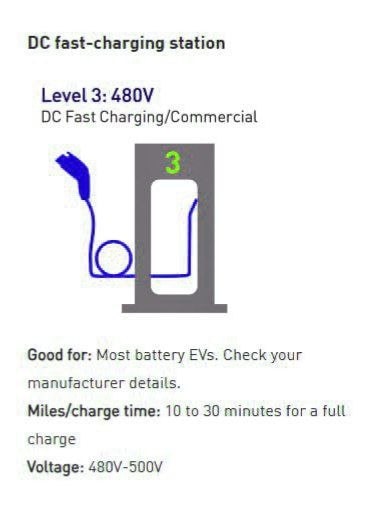
DC fast charging provides higher-power charging by delivering direct current to the vehicle’s battery through a compatible DC charging interface.
Unlike AC charging, where the vehicle’s onboard charger converts incoming AC electricity, DC fast charging equipment performs the main power conversion within the external charging station.
DC fast chargers are commonly found at commercial charging stations, public parking facilities, fuel stations, and travel routes.
Key characteristics include:
- Charging power: Commercial DC charging equipment is available across a wide range of power ratings, including 30 kW, 60 kW, 120 kW, 180 kW, and higher-capacity systems.
- DC connectors: Depending on the model and vehicle market, chargers may support CCS1, CCS2, CHAdeMO, GB/T, or other compatible DC charging standards.
- Electrical infrastructure: High-power chargers generally require dedicated electrical design and suitable commercial power infrastructure.
- Charging time: Some compatible electric vehicles can charge from a low battery level to approximately 80% in 20–60 minutes, depending on charging power and vehicle limitations.
- Commercial operation: Selected equipment supports monitoring, payment integration, user authorization, and charging station management.
A DC fast charger cannot guarantee a full battery charge in 30 minutes. Charging time depends on battery capacity, battery temperature, state of charge, the vehicle’s maximum DC charging rate, and the charger’s available output.
Commercial DC charging installations require detailed assessment of available electrical capacity, protection systems, site access, and applicable approval requirements.
EV Charger Types Comparison: Power, Speed, and Applications
The following comparison highlights the main differences between common electric vehicle charging categories.
| Feature | Level 1 AC | Level 2 AC | DC Fast Charging |
|---|---|---|---|
| Typical Supply | 120V AC in North America | Higher-power AC supply, including suitable 230V installations | Dedicated high-power electrical supply |
| Charging Speed | Slow | Moderate to fast AC charging | Fast to ultra-fast, depending on power |
| Typical Use | Basic charging | Home, workplace, and parking | Public and commercial stations |
| Battery Charging Interface | AC | AC | DC |
| Installation Requirements | Compatible rated outlet and circuit | Suitable dedicated electrical circuit and protection | Commercial electrical infrastructure and technical design |
| Best For | Long parking periods and low daily charging needs | Daily charging at home or work | Public charging and high-turnover locations |
For most home charging applications in Jordan, selecting a compatible AC charger and verifying the available electrical circuit are more important than relying on the charging level name alone.
Electric Vehicle Charger Brands Available in Jordan
Electric car charger brands differ in their equipment design, connector options, charging capacity, safety features, software functions, and warranty arrangements.
AL Emtyaz’s original charger guide discusses several international and regional charging brands. Current product availability should be confirmed before ordering, as not every brand listed below is necessarily available from AL Emtyaz at the time of inquiry.
1. Sigma EV Chargers
Sigma EV chargers are among the charging solutions promoted by AL Emtyaz in Jordan. The Sigma 32A home charger is designed for adjustable AC charging and includes features such as current selection, a color display, and delayed charging.
The available Sigma charging range also includes commercial DC equipment for public and private charging station projects.
For the Sigma 32A home charger, AL Emtyaz has advertised a price of JOD 140 with a one-year manufacturing defect warranty. Please confirm the current offer, connector type, delivery coverage, and installation costs before ordering.
2. Tesla EV Chargers
Tesla charging equipment includes home and destination charging products designed for compatible electric vehicles.
Tesla chargers vary by model and market. Their compatibility with non-Tesla vehicles depends on the charging connector, the particular charger version, and any supported adapter arrangements.
Drivers should confirm whether the charger has a suitable connector for their vehicle and whether the electrical installation meets the equipment specifications.
3. Alpha EV Chargers
Alpha electric vehicle chargers are among the brands discussed in the Jordanian EV charging market.
Depending on the specific model, features may include adjustable charging settings, electrical protection functions, and smart monitoring options.
Vehicle compatibility and the need for an appropriate connector or adapter should be checked before purchase. Ask AL Emtyaz about available alternatives and current stock.
4. Zencar EV Chargers
Zencar EV chargers are known for portable and other AC charging equipment designed for compatible vehicles and electrical supplies.
Different products may include current adjustment, electrical protection features, and Type 1 or Type 2 charging connector options.
As with any portable charging product, users should verify the supply voltage, current rating, connector, and approved outlet requirements before use.
5. Teison EV Chargers
Teison offers electric vehicle charging equipment for different charging applications.
Depending on the charger model, available features may include adjustable charging power, user controls, and monitoring functions.
Customers comparing Teison with other EV charger brands should review the model-specific datasheet, connector options, electrical safety requirements, and warranty terms.
6. Wallbox EV Chargers
Wallbox EV chargers include residential and commercial charging solutions with features that vary according to the selected model.
Some Wallbox products offer smart charging controls, charging schedule management, and monitoring through compatible applications.
Connector compatibility, electrical ratings, and available smart features should be verified for the specific charger model and the vehicle being charged.
7. Chargers for Nissan, Hyundai, Kia, Ford, Volkswagen, and Other Vehicles
Electric vehicle owners may need charging equipment compatible with models from Nissan, Hyundai, Kia, Ford, Volkswagen, Mercedes-Benz, Toyota, Fiat, and other manufacturers.
Choosing the correct charger depends on the exact vehicle model, model year, market of origin, AC charging connector, and onboard charging capacity.
For imported electric vehicles, the charging connector may differ from that used on vehicles sold in other markets. Confirm the connector and electrical requirements before buying any charger or adapter.
Portable EV Chargers in Jordan
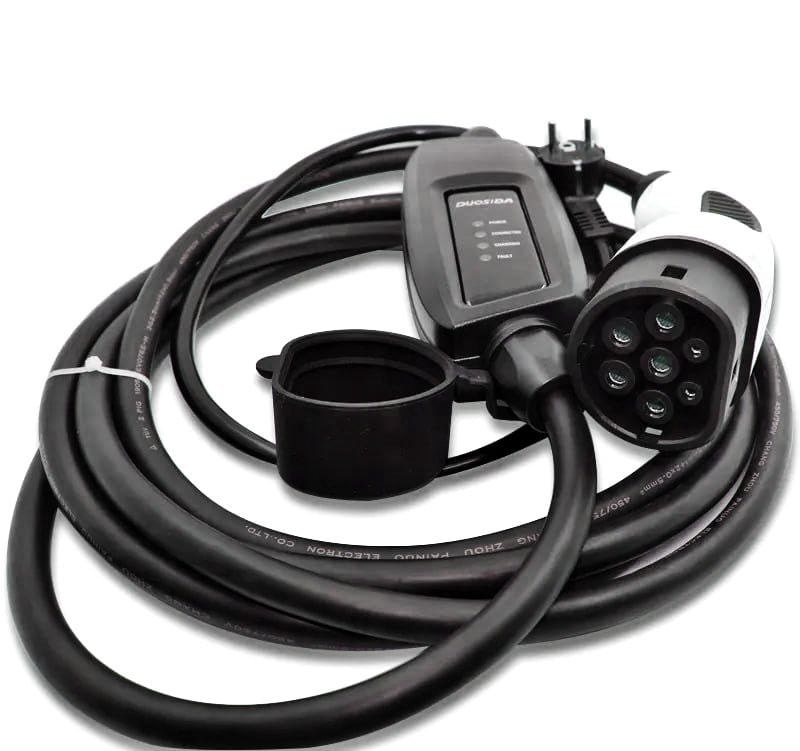
A portable EV charger, sometimes called a portable EV charging cable or portable Electric Vehicle Supply Equipment (EVSE), provides a flexible way to charge a compatible vehicle from a suitable electrical power source.
Portable charging equipment can be useful for drivers who need an additional charging option at home, at work, or at another property with an appropriate electrical outlet.
Many portable EV chargers are designed for AC electrical supplies. In Jordan, suitable 220–240V-rated equipment is more relevant to the local domestic supply than chargers designed exclusively for 120V operation.
Advantages of Portable Electric Car Chargers
- Portable design: The equipment can be transported between suitable charging locations.
- Flexible charging: Some models provide adjustable charging current settings.
- Additional charging option: Useful as a secondary charger when away from a permanent wall-mounted charging point.
- Vehicle compatibility: Available with different connectors for compatible electric vehicle models.
- Different power ratings: Portable chargers are available with various voltage and current specifications.
Safety note: A portable charger must not be connected to an unsuitable or overloaded socket. Electrical wiring, grounding, outlet rating, protective devices, and continuous charging load should be assessed before use. Ordinary extension cables and improvised adapters should be avoided unless explicitly permitted by the equipment manufacturer.
Portable EV Chargers with Battery Backup
Some portable energy storage products use lithium batteries and may provide a power output for charging compatible electrical equipment.
However, these products are different from ordinary portable EV charging cables. Their ability to charge an electric vehicle depends on battery capacity, continuous power output, supported electrical connection, and the vehicle’s charging requirements.

Before purchasing a portable battery-based solution for EV charging, verify that the complete equipment configuration is specifically approved and technically capable of supplying the intended vehicle.
Important Electric Car Charger Specifications to Compare
When comparing electric car charger specifications, looking at the brand name alone is not enough. The most important factors include electrical power, current rating, connector type, charging functions, protective features, and compatibility with the vehicle.
1. Charging Power in kW
The charging power rating indicates how quickly a charger can potentially deliver energy to a compatible electric vehicle. A higher power rating can support faster charging, but the actual rate also depends on the car’s charging limitations.
For example, an AC charger rated at approximately 7.4 kW cannot necessarily charge every vehicle at 7.4 kW if the vehicle’s onboard charger supports a lower maximum rate.
2. Charging Current and Voltage
The available charging current, measured in amperes (A), and the electrical supply voltage, measured in volts (V), are key factors when calculating AC charging power.
Examples of common single-phase charging configurations at 230V include:
- 10A: Approximately 2.3 kW.
- 16A: Approximately 3.7 kW.
- 20A: Approximately 4.6 kW.
- 24A: Approximately 5.5 kW.
- 32A: Approximately 7.4 kW.
These are nominal calculations. Actual charging power depends on the available supply, electrical system, charger settings, and vehicle.
3. EV Charging Connector Type
The charging connector must match the vehicle’s charging inlet or use a compatible, approved adapter where permitted.
Common connector standards include:
- Type 1 (J1772): Used for AC charging on various vehicles from markets such as North America and parts of Asia.
- Type 2: Common for AC charging on many European-market electric vehicles.
- GB/T: Chinese-market charging standards with distinct AC and DC connector configurations.
- CCS1: A combined AC/DC charging interface based on the Type 1 connector format.
- CCS2: A combined AC/DC charging interface based on the Type 2 connector format.
- CHAdeMO: A DC fast charging standard used by selected vehicle models, including certain Nissan LEAF versions.
- NACS / Tesla charging connector: Used on compatible vehicles and charging equipment, with availability and compatibility varying by market.
Do not select a charger solely because it is described as compatible with Chinese, European, or American vehicles. Always confirm the exact connector and charging specifications of your particular vehicle.
4. Electrical Safety and Protection Features
Depending on the charger model, important safety features may include overcurrent protection, overvoltage protection, temperature monitoring, leakage-current detection, grounding checks, and other protective functions.
Some chargers also provide environmental protection ratings for outdoor installation. The actual protection level and required external electrical devices should be confirmed in the product specifications.
5. Smart Charging and Mobile App Features
Selected smart EV chargers offer features such as delayed charging, charging schedule management, energy monitoring, remote access, and user authorization.
These features can be useful for home users, businesses, and charging station operators who want better visibility into charging activity.
The exact functions depend on the charger model, software platform, and network connectivity.
Nissan LEAF EV Charger Options in Jordan
Drivers looking for a Nissan LEAF charger in Jordan should first identify the vehicle’s model year, market of origin, and charging connector configuration.
Many Nissan LEAF models use a Type 1 (J1772) connector for AC charging, while selected versions support CHAdeMO for DC fast charging. Exact specifications vary by model and market.
For everyday home charging, a compatible AC charger may be suitable. Available charging power will depend on the LEAF’s onboard AC charging capability and the charger installation.
Important considerations when choosing a Nissan LEAF charger include:
- Confirming the vehicle’s charging port type.
- Checking the supported AC charging power.
- Selecting a suitable portable or wall-mounted charger.
- Verifying compatibility with the local electrical supply.
- Considering cable length and appropriate safety protection.
AL Emtyaz can help you compare appropriate charging equipment for your Nissan LEAF or another electric vehicle. Call 0798495491 and provide your car model and charging connector details.
How Many kW Does an Electric Car Charger Use?
One of the most common questions about EV charger power consumption is the difference between charging power and the amount of electricity consumed.
Kilowatts (kW) measure electrical power at a given moment, while kilowatt-hours (kWh) measure the amount of electrical energy used over time.
Single-Phase EV Charger Power Calculation
For a simplified single-phase AC calculation, assuming a power factor close to 1:
Charging Power (kW) ≈ Voltage (V) × Current (A) ÷ 1,000
For example, a 32A charger operating at 230V has a nominal power of:
230 × 32 ÷ 1,000 = 7.36 kW
If the charging system operates at this power for one hour, it would draw approximately 7.36 kWh of electrical energy, before considering actual operating conditions and losses.
For a vehicle charging over three hours at a constant 7.36 kW, the nominal electrical energy supplied would be approximately 22.08 kWh. The energy stored in the battery may be lower because charging is not perfectly efficient.
Three-Phase EV Charger Power Calculation
For a balanced three-phase AC supply, a simplified calculation using line-to-line voltage is:
Three-Phase Power (kW) ≈ 1.732 × Line-to-Line Voltage (V) × Current (A) ÷ 1,000
For example, with a 400V three-phase supply and 32A per phase:
1.732 × 400 × 32 ÷ 1,000 ≈ 22.2 kW
This is a nominal power calculation assuming a power factor close to 1. Actual charging is limited by the vehicle’s onboard AC charger and the installation’s available capacity.
How Long Does It Take to Charge an Electric Car?
Charging duration depends on the amount of energy required, the available charging power, and how the vehicle manages charging.
For a simplified estimate:
Estimated Charging Time (hours) ≈ Energy Required (kWh) ÷ Average Charging Power (kW)
For example, adding 30 kWh of energy at an average charging power of 7 kW would take approximately 4.3 hours before accounting for additional charging losses and any reduction in charging power.
Actual results vary according to battery capacity, temperature, battery charge level, and the vehicle’s charging characteristics.
EV Charger Prices in Jordan: Home, Portable, and DC Chargers
The price of an electric car charger in Jordan depends on the charger category, charging capacity, connector type, manufacturer, safety functions, smart features, and whether electrical installation is included.
Basic portable AC charging equipment generally costs less than professionally installed high-power charging stations, although the exact prices vary considerably between brands and models.
Sigma 32A Home EV Charger Price
AL Emtyaz has promoted the Sigma 32A Level 2 charger at JOD 140, including a one-year warranty and advertised delivery benefits. Please contact us to confirm the price and current offer conditions.
General AC EV Charger Price Ranges
The original Arabic guide previously cited a broad market estimate of approximately JOD 150–900 for certain Level 1 and Level 2 charging products. This figure is historical and should not be interpreted as a verified current market range.
Prices can vary according to the manufacturer, charger rating, connectivity features, connector type, warranty, and included accessories.
DC Fast Charger Prices and Commercial Installation Costs
Commercial DC fast charger prices in Jordan are significantly influenced by the required power output and the site’s electrical infrastructure.
The original guide mentioned project estimates of approximately JOD 12,000–25,000 for certain DC charger installations. These older figures are not current quotations and do not describe every commercial charging configuration.
A modern commercial charging station may require a much larger investment depending on equipment capacity, electrical upgrades, number of charging points, transformer requirements, civil works, network management, and permits.
For an accurate commercial charging project price, a technical site assessment and equipment-specific quotation are necessary.
Factors Affecting Electric Vehicle Charger Prices
The main factors that influence EV charger prices include:
- Brand and model: Different manufacturers offer different product specifications, warranties, and software capabilities.
- AC or DC charging: DC fast charging systems generally require more complex and expensive equipment.
- Charging power: The maximum electrical capacity influences equipment design and installation requirements.
- Connector type: Different plugs, cables, and charging standards can affect the price and availability.
- Safety features: Electrical protection, temperature monitoring, environmental ratings, and certification influence equipment selection.
- Smart features: Displays, Wi-Fi, mobile applications, scheduling, RFID access, and backend management may increase functionality and cost.
- Installation work: Cabling, electrical panels, circuit protection, mounting, and site preparation may add costs beyond the charger itself.
For current EV charger prices in Amman and Jordan, contact AL Emtyaz and provide your vehicle model, connector type, and whether you need charger supply only or supply with installation.
How to Choose the Best Electric Car Charger in Jordan
The best charger is not necessarily the most expensive or the one with the highest advertised charging power. The right equipment should be compatible with the vehicle, suitable for the electrical supply, safe to install, and capable of meeting daily charging requirements.
Before buying an EV charger, consider the following:
- Vehicle compatibility: Identify the vehicle’s model, year, and charging connector.
- Electrical supply: Check whether the charging location has a suitable single-phase or three-phase connection.
- Charging power: Choose equipment that matches the vehicle’s charging capability and the electrical installation.
- Daily driving needs: Consider how much energy must be added during your usual parking period.
- Portable or fixed installation: Decide whether a portable charger or wall-mounted charging station is more appropriate.
- Safety requirements: Confirm electrical protection, suitable cabling, grounding, and the necessary installation checks.
- Warranty and support: Review the product warranty, availability of technical assistance, and replacement arrangements.
- Total cost: Compare the charger price with delivery, installation, and any additional electrical work.
AL Emtyaz can help you understand these requirements and compare suitable equipment before placing an order.
Frequently Asked Questions About EV Chargers in Jordan
How much does an EV charger cost in Jordan?
EV charger prices vary by brand, power rating, connector, features, and installation requirements. AL Emtyaz has advertised a Sigma 32A Level 2 home charger for JOD 140. Contact us to confirm current availability, pricing, and delivery conditions.
What is the best EV charger for home use in Jordan?
A suitable Level 2 AC charger is often a practical option for home charging. The best model depends on the vehicle’s connector, onboard charging limit, household electrical supply, and available circuit capacity.
How fast is a 32A electric car charger?
At 230V single-phase, a 32A charger has a nominal power of approximately 7.36 kW. Actual charging speed depends on the vehicle’s onboard AC charger, battery condition, and installation limits.
Can I charge an electric car using a normal wall socket?
Some electric vehicles can charge using portable equipment connected to a suitably rated and protected socket. However, not every household outlet is suitable for continuous EV charging. An electrician should verify the circuit, outlet, wiring, grounding, and allowable charging current.
What is the difference between AC and DC EV charging?
AC chargers supply alternating current to the vehicle’s onboard charger, which converts it for the battery. DC fast chargers perform the main power conversion externally and supply direct current through a compatible DC charging interface, generally allowing higher charging power.
Are Type 1 and Type 2 EV chargers interchangeable?
No. Type 1 and Type 2 use different connector designs. Some vehicles and equipment may support suitable approved adapters, but compatibility must be checked for the exact vehicle, charger, and electrical requirements.
Can a Sigma EV charger charge Chinese, European, and American electric cars?
Sigma offers chargers with different connector configurations, including options associated with Type 1, Type 2, GB/T, and Tesla charging interfaces. The correct version must be selected for the specific vehicle; a single connector does not directly fit every charging port.
What is the difference between kW and kWh in EV charging?
kW measures charging power, while kWh measures electrical energy consumed or delivered over time. For example, charging at 7 kW for one hour corresponds to approximately 7 kWh of electrical energy before accounting for variations and losses.
How much does it cost to install a commercial EV charging station in Jordan?
Commercial EV charging station costs depend on charger power, number of connectors, electrical infrastructure, civil works, software requirements, and necessary approvals. A technical site assessment is required before providing an accurate project quotation.
Does AL Emtyaz provide EV charger sales and installation?
Yes. AL Emtyaz Facilities Management provides electric vehicle charger supply, home charging solutions, installation services, and consultation for commercial charging station projects in Jordan. Contact our team for current equipment availability and service arrangements.
Compare EV Charger Prices and Specifications with AL Emtyaz
Whether you need a 32A home EV charger, a portable electric car charger, a charger compatible with your vehicle, or commercial DC fast charging equipment, AL Emtyaz Facilities Management can help you understand the available options.
We help customers compare EV charger types, connector compatibility, charging power, electrical requirements, warranty terms, and pricing before purchasing equipment or arranging installation.
For residential use, ask about the Sigma 32A charging solution and the current price. For business and investment projects, contact our team to discuss commercial charging capacities, station requirements, and equipment supply.
Call 0798495491 today to request information about EV charger types, specifications, and prices in Amman and Jordan.
You can also contact AL Emtyaz through WhatsApp using the button below: