Underground cable fault detection in Jordan is an essential electrical maintenance service for locating hidden cable damage, short circuits, insulation failures, and power cable faults without unnecessary excavation.
When an underground power cable develops a fault, it can cause unexpected power outages, electrical leakage, equipment interruptions, and potential safety hazards. Identifying the exact location and cause of the problem is therefore critical before starting any repair work.
At AL Emtyaz Facilities Management, our experienced electrical engineers and technicians provide professional underground cable fault detection, testing, and repair services in Amman and across Jordan. As part of our comprehensive Electrical Services in Jordan, we use specialized diagnostic equipment to investigate electrical cable failures and determine suitable repair solutions.
Our services include underground cable fault location, electrical short circuit detection, cable insulation testing, ground fault identification, and damaged cable repair. By identifying the affected cable section accurately, our team can help reduce unnecessary digging, limit disruption, and support the safe restoration of electrical systems.
Whether you are experiencing repeated circuit breaker trips, unexplained power interruptions, damaged underground wiring, or suspected electrical leakage, AL Emtyaz provides a structured approach to cable fault diagnosis and repair.
Request underground cable fault detection in Jordan. Contact AL Emtyaz at 0798495491 to discuss your electrical cable problem and arrange a professional inspection.
You can also contact our team directly through WhatsApp:
Underground Cable Fault Detection Using Advanced Testing Equipment
Locating faults in buried electrical cables requires technical knowledge and specialized testing equipment. Unlike exposed electrical wiring, underground cables are concealed beneath soil, concrete, roads, or other surfaces, making visual inspection difficult.
At AL Emtyaz, we use professional underground cable fault detection equipment to investigate electrical failures, identify the affected cable section, and narrow down the possible fault location before repair work begins.
Using suitable cable testing methods can reduce the need for exploratory excavation and help protect surrounding electrical and civil infrastructure. The effectiveness of each method depends on the cable construction, fault type, installation conditions, and accessibility of the cable route.
Electrical Cable Fault Locators and Testing Instruments
Different diagnostic instruments are used to investigate underground electrical cable faults. These include:
- Underground cable locators: Equipment used to trace buried cable routes and help identify the position of electrical cables beneath the ground.
- Electrical fault detection instruments: Specialized devices that help identify abnormal electrical conditions, damaged conductors, and suspected cable faults.
- Insulation resistance testers: Instruments used to evaluate cable insulation and detect insulation deterioration or possible leakage paths.
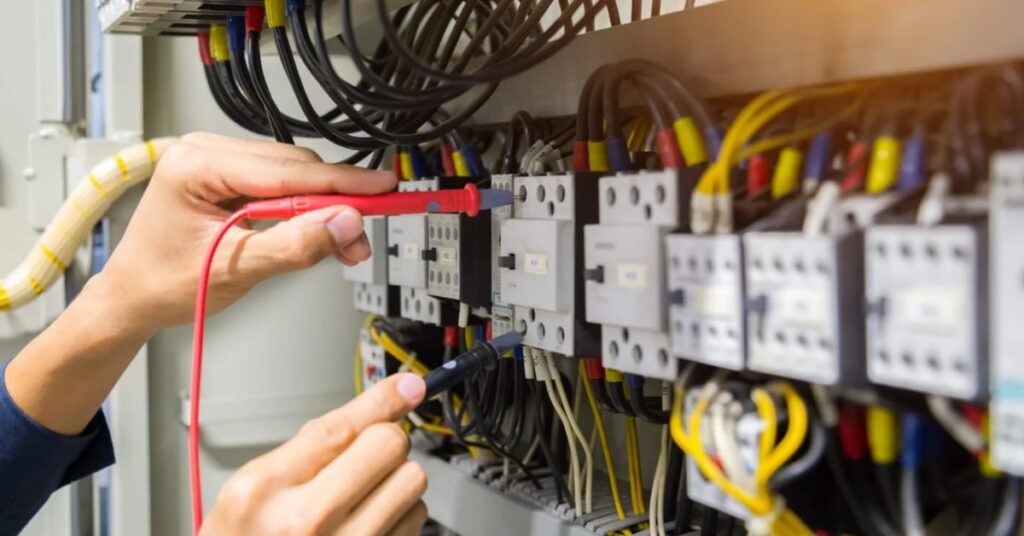
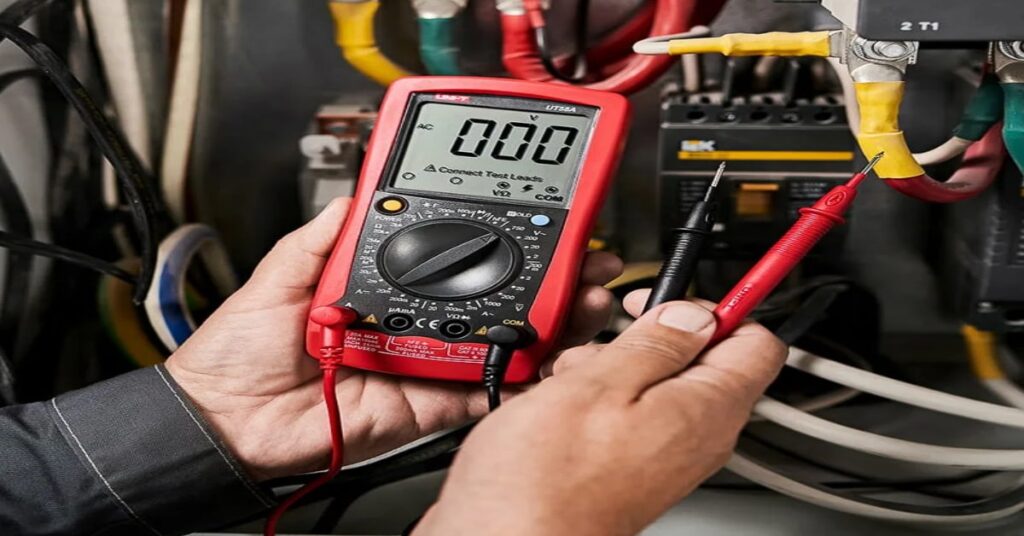
- Multimeters and ohmmeters: Electrical measuring instruments used for voltage, resistance, and continuity testing under appropriate testing conditions.
- Cable tracing and signal detection equipment: Instruments that assist in following underground cable routes and identifying areas requiring further investigation.
For certain types of cable faults, technologies such as Time Domain Reflectometry (TDR) can also be used for fault pre-location. This technique analyzes reflected electrical pulses to estimate the distance to an abnormality, such as a conductor break or short circuit.
The appropriate testing method is selected according to the electrical system and the characteristics of the reported fault.
Benefits of Professional Underground Cable Fault Location
- Identify potential fault locations before starting excavation or cable replacement.
- Reduce unnecessary damage to surrounding surfaces and buried infrastructure.
- Distinguish between conductor faults, insulation problems, and other electrical failures.
- Support more targeted electrical cable repairs.
- Help reduce troubleshooting time and unnecessary maintenance costs.
Our goal is to provide reliable underground power cable fault location services in Jordan that support safe electrical operation and efficient maintenance planning.
Electrical Cable Short Circuit Detection and Ground Fault Testing
Electrical cable short circuit detection is an important part of maintaining safe and reliable power distribution systems.
A short circuit occurs when an unintended low-resistance electrical connection develops between conductors or electrical points at different potentials. A ground fault occurs when electrical current follows an unintended path to earth or grounded components.
These problems may result from damaged insulation, cable deterioration, moisture intrusion, mechanical damage, defective joints, or installation faults.
At AL Emtyaz, our electrical inspection process focuses on identifying the nature of the fault and locating the affected cable section before determining the appropriate repair method.
Common Signs of Electrical Cable Short Circuits
- Repeated circuit breaker trips: Protective devices disconnecting power repeatedly due to electrical faults or abnormal operating conditions.
- Unexpected power outages: Sudden electricity interruptions affecting buildings, equipment, or particular electrical circuits.
- Electrical leakage: Unintended current flow caused by insulation deterioration or damaged cable components.
- Damaged cable insulation: Cracks, deterioration, moisture-related defects, or mechanical damage affecting cable integrity.
- Unusual heating: Excessive temperatures around accessible cable connections, joints, or electrical equipment.
- Intermittent electrical supply: Unstable power caused by damaged conductors, defective connections, or other circuit problems.
These symptoms do not always indicate an underground cable fault. Professional electrical testing is required to distinguish cable damage from problems involving circuit breakers, connected equipment, or other parts of the electrical installation.
How We Investigate Cable Short Circuits
Our team evaluates the affected electrical circuit and uses appropriate diagnostic methods to investigate the reported problem.
- Electrical fault analysis: Identify the symptoms and determine which circuit or cable section may be affected.
- Continuity and resistance testing: Examine conductor continuity and identify abnormal electrical resistance where suitable.
- Insulation testing: Check cable insulation resistance to identify possible insulation failures.
- Cable route investigation: Trace underground cable paths and narrow down the suspected fault area.
- Electrical safety assessment: Review relevant electrical conditions before repair or restoration work.
These inspections are carried out using appropriate electrical safety procedures. Tests requiring isolation are performed only after the relevant circuit has been safely disconnected and verified according to applicable requirements.
Steps for Underground Cable Fault Detection in Jordan
At AL Emtyaz, we follow an organized diagnostic process to investigate underground electrical cable faults and determine the appropriate maintenance or repair procedure.
Our approach combines initial electrical assessment, cable testing, fault location, insulation evaluation, and documentation of the findings.
1. Initial Electrical Inspection and Fault Identification
We begin by reviewing the reported electrical problem, affected equipment, circuit behavior, and available information about the underground cable installation.
Our technicians assess the symptoms and identify the circuits that require further testing. This preliminary inspection helps distinguish possible cable faults from other electrical installation problems.
2. Underground Cable Route Tracing and Fault Location
Specialized cable tracing equipment is used where appropriate to identify the underground cable route and investigate the suspected location of the fault.
Determining the cable path is especially important when electrical cables pass beneath roads, paved surfaces, landscaped areas, or multiple building sections.
Accurate cable route information allows technicians to focus further inspections on relevant sections and helps avoid unnecessary excavation.
3. Cable Continuity and Resistance Testing
Electrical measuring instruments, including ohmmeters and suitable continuity testers, are used to check the condition of cable conductors after appropriate electrical isolation.
These tests help identify conductor breaks, abnormal resistance, and electrical continuity problems that may affect power transmission.
The results help our electrical team determine whether further fault location, insulation testing, or repair work is required.
4. Cable Insulation Resistance Testing
Insulation resistance testing is performed when appropriate to evaluate the condition of the electrical insulation surrounding cable conductors.
Low insulation resistance may indicate moisture intrusion, damaged insulation, or other conditions that create an unintended electrical leakage path.
Testing procedures and applied test voltages are selected according to the cable characteristics and applicable safety requirements.
5. Voltage, Current, and Electrical Grounding Assessment
Our team evaluates relevant voltage and current conditions using suitable electrical instruments and safe measurement procedures.
We also assess the grounding and earthing arrangements associated with the affected electrical installation to identify conditions that may compromise electrical protection or system performance.
6. Fault Assessment and Repair Recommendations
After completing the required investigations, our technicians review the test results and determine the likely nature and location of the cable fault.
Depending on the findings, the recommended solution may involve cable joint repair, damaged insulation repair, replacement of an affected cable section, or additional electrical testing.
This structured approach supports more efficient underground cable fault diagnosis and repair in Jordan while helping preserve the safety and reliability of the electrical installation.
How Electrical Cable Short Circuit Faults Are Located
Locating an electrical short circuit within an underground cable requires specialized diagnostic procedures because the damaged section may not be visible from the surface.
At AL Emtyaz, our electrical team uses suitable testing and inspection techniques to identify faults affecting cable conductors, insulation, and associated electrical connections.
1. Identifying the Faulted Electrical Circuit
The first stage is to determine which electrical circuit is affected and review the conditions associated with the reported fault.
Initial measurements and inspections help identify possible short circuits, open conductors, insulation failures, or grounding problems.
2. Inspecting Cable Insulation and Accessible Connections
Where electrical connections, cable terminations, and cable sections are accessible, our technicians inspect them for signs of mechanical damage, deterioration, loose connections, corrosion, or insulation problems.
Damaged cable insulation can allow unintended current paths and may increase the risk of electrical faults if the problem is not addressed.
3. Measuring Electrical Resistance and Continuity
Appropriate resistance and continuity measurements help evaluate the integrity of electrical conductors and identify conditions associated with conductor breaks or short circuits.
These measurements are interpreted alongside the cable specifications, installation configuration, and the results of other diagnostic checks.
4. Using Cable Tracing and Diagnostic Technology
Cable tracing and signal detection instruments help establish the route of buried cables and identify areas requiring further assessment.
For accessible electrical terminations and connections, thermal imaging may also help reveal abnormal heating associated with high-resistance connections or overloaded components. Thermal imaging does not, by itself, establish the precise location of every buried cable fault.
Other specialized cable fault location techniques may be appropriate depending on the fault resistance, cable construction, and operating voltage.
5. Documenting Electrical Fault Findings
Once the fault investigation is complete, the findings are documented to support the repair process.
Records may include the affected cable section, test results, observed damage, recommended repair procedures, and any additional inspections required before restoring the electrical system.
Electrical Cable Testing Equipment and Insulation Resistance Testers
Professional electrical cable testing requires instruments capable of measuring cable resistance, conductor continuity, insulation condition, and other electrical characteristics.
AL Emtyaz uses specialized electrical testing equipment to investigate cable faults and assess the condition of electrical installations.
Insulation Resistance Tester (Megger)
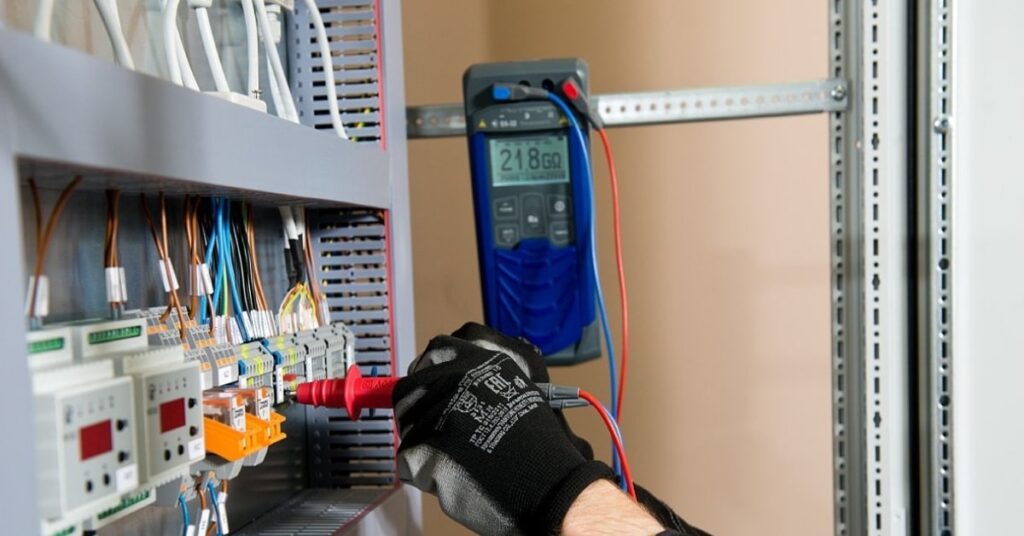
An Insulation Resistance Tester, commonly referred to as a Megger, is an important instrument for evaluating the condition of electrical cable insulation.
The instrument measures insulation resistance by applying an appropriate test voltage and evaluating the resulting electrical current.
Insulation resistance measurements can help identify insulation deterioration, moisture-related problems, and possible leakage paths between conductors or to ground.
Unlike a basic continuity tester, an insulation resistance tester is designed to assess insulation performance using selected test voltages. Testing must be performed by qualified personnel with the circuit isolated and sensitive connected equipment protected as required.
Benefits of Professional Cable Insulation Testing
- Assess the electrical insulation condition of power cables.
- Identify possible insulation deterioration or moisture-related defects.
- Support the investigation of electrical leakage and ground faults.
- Provide useful information before cable repair or replacement.
- Support maintenance planning and electrical safety assessments.
Insulation resistance measurements are evaluated together with other test findings. A single measurement does not necessarily identify the precise physical location of an underground cable fault.
Underground Cable Fault Locator Equipment and Cable Route Detection
An underground cable fault locator is used to assist in identifying electrical cable faults and estimating where a damaged section may be located.
These tools are especially useful when an electrical cable runs beneath roads, concrete floors, industrial sites, residential developments, or other areas where extensive digging would be disruptive.
Underground cable fault location generally involves more than one diagnostic stage. Technicians may first identify the nature of the fault, estimate its distance from an accessible test point, trace the cable route, and then narrow down the physical location requiring attention.
Cable Fault Pre-Location and Precise Fault Identification
Fault pre-location techniques help estimate the distance between the testing point and the suspected cable defect.
Depending on the cable and fault characteristics, diagnostic technologies such as TDR, signal tracing, or other specialized methods can support the fault location process.
After the approximate fault position is identified, further investigation may be necessary to determine the actual location along the underground cable route.
The purpose of this process is to make any necessary excavation or repair work more targeted rather than opening large sections of the installation without sufficient diagnostic information.
Reducing Unnecessary Excavation and Repair Costs
One of the primary advantages of professional underground cable fault location services is the ability to identify potential repair areas before excavation begins.
Although some cable repairs require access to the buried installation, accurate diagnostic information can help reduce unnecessary digging, minimize disturbance to surrounding areas, and support better repair planning.
For commercial, industrial, and residential properties in Jordan, this can be particularly valuable when underground cables pass beneath finished surfaces or important operational areas.
Underground Electrical Cable Repair and Fault Restoration
After identifying the cause and location of an underground cable fault, the next stage is determining the appropriate repair method.
AL Emtyaz provides electrical cable fault repair services based on the condition of the affected cable, the type of damage, and the technical requirements of the electrical installation.
1. Electrical Cable Fault Assessment
Our electrical team reviews the diagnostic results to determine whether the problem involves a broken conductor, damaged insulation, a defective cable joint, a short circuit, or another electrical fault.
Understanding the fault type is essential for selecting a repair method that is suitable for the cable construction and operating conditions.
2. Damaged Cable Repair or Replacement
Depending on the condition of the cable and the applicable electrical requirements, repairs may involve restoring damaged connections, replacing defective joints, or replacing an affected cable section.
Where damage is extensive or the cable is no longer suitable for continued operation, replacement may be recommended instead of a localized repair.
Repair materials and procedures are selected according to the cable specifications, installation environment, and relevant electrical safety requirements.
3. Post-Repair Electrical Cable Testing
After completing the necessary repair work, appropriate electrical tests are carried out to assess the repaired cable and confirm that relevant operating and safety conditions have been addressed.
Depending on the installation, these checks may include continuity testing, insulation resistance measurements, and additional examinations required for the cable type.
The electrical system is returned to service only after the applicable inspection and safety requirements have been satisfied.
4. Maintenance Documentation and Recommendations
Our team documents the fault investigation, completed repair activities, and relevant testing results.
Where necessary, we also provide recommendations regarding damaged sections, electrical connections, cable protection, or future maintenance requirements.
These records help facility owners and maintenance managers maintain a clearer history of underground cable faults and completed electrical repairs.
Why Choose AL Emtyaz for Underground Cable Fault Detection in Jordan?
At AL Emtyaz Facilities Management, we understand the importance of reliable electrical infrastructure for residential buildings, commercial properties, industrial facilities, and other installations.
Our underground cable fault detection and repair services focus on technical accuracy, responsible electrical testing, and selecting appropriate solutions for each reported problem.
1. Experienced Electrical Engineers and Technicians
Our electrical team has experience in diagnosing electrical installation faults, investigating cable problems, and performing maintenance and repair work.
Technical experience is particularly important when underground cables are part of complex electrical distribution systems or serve multiple buildings and operational areas.
2. Specialized Cable Testing and Fault Detection Equipment
We use professional electrical testing instruments to evaluate cable conditions and investigate faults that cannot be identified through ordinary visual inspection.
Our diagnostic approach helps determine whether a reported electrical problem requires cable repair, further investigation, or replacement of a damaged section.
3. Competitive Pricing and Practical Repair Solutions
AL Emtyaz aims to provide competitively priced underground cable fault detection and repair services in Jordan while maintaining attention to technical quality and electrical safety.
The scope and cost of the service depend on factors such as the cable type, installation location, accessibility, required testing, and extent of damage.
By investigating the problem before recommending repair work, our team helps property owners make better-informed maintenance decisions.
4. Electrical Safety and Professional Maintenance Practices
Electrical safety is a priority throughout the fault investigation and repair process.
Our team follows appropriate electrical isolation, testing, inspection, and maintenance procedures according to the nature of the installation and applicable safety requirements.
These practices support safer working conditions and help reduce the risks associated with damaged electrical cables.
5. Inspection, Repair, and Maintenance Follow-Up
Our services extend beyond the initial identification of cable faults. Depending on the findings and required scope of work, we can support cable repair, further inspections, and maintenance recommendations.
This approach helps organizations address the immediate problem while identifying conditions that may require attention to support long-term electrical system reliability.
Underground Cable Fault Detection for Residential, Commercial, and Industrial Properties
Underground electrical cables are used in many types of properties and infrastructure projects throughout Amman and other areas of Jordan.
AL Emtyaz provides underground cable fault inspection and repair solutions for various types of installations, including:
- Residential buildings and villas: Detection of underground electrical cable faults affecting building power supplies and external electrical installations.
- Apartment complexes: Investigation of cable faults affecting shared electrical systems and connections between buildings.
- Commercial buildings and offices: Electrical cable inspection and fault diagnosis for commercial property infrastructure.
- Factories and industrial facilities: Investigation of underground power cable problems that may affect industrial operations.
- Warehouses and logistics facilities: Cable fault detection for underground electrical connections and distribution systems.
- Hotels, hospitals, and educational facilities: Inspection of underground electrical cable systems serving buildings and operational areas.
- Construction and development projects: Electrical cable route identification, fault investigation, and testing of installed underground cables.
Our electrical team evaluates the reported problem and the installation conditions to determine the appropriate inspection and testing requirements.
Frequently Asked Questions About Underground Cable Fault Detection
How do you detect a fault in an underground electrical cable?
Underground cable faults are investigated using electrical measurements, insulation resistance testing, cable tracing, and specialized fault location techniques. The testing process helps identify the type of fault and estimate the location of the damaged cable section before repair work begins.
Can an underground cable fault be located without digging?
Specialized diagnostic equipment can often estimate or pinpoint the location of an underground cable fault without exploratory digging. However, excavation may still be necessary to access and repair the damaged cable. The amount of excavation depends on the installation and accuracy of the diagnostic results.
What causes underground electrical cable faults?
Common causes include insulation deterioration, moisture intrusion, mechanical damage, defective cable joints, conductor breaks, installation defects, and damage caused by excavation or surrounding ground conditions.
What equipment is used to detect underground cable faults?
Depending on the cable type and fault characteristics, technicians may use insulation resistance testers, continuity testers, multimeters, cable route tracers, fault locators, and specialized technologies such as Time Domain Reflectometry (TDR).
Can a Megger detect electrical cable faults?
An insulation resistance tester, commonly called a Megger, can help identify insulation deterioration and possible electrical leakage paths. However, it does not normally pinpoint the physical location of a fault by itself. Additional cable fault location methods may be required.
Can damaged underground electrical cables be repaired?
Many underground cable faults can be repaired by replacing damaged joints or affected cable sections, depending on the cable type, extent of damage, and technical requirements. In other situations, replacing the cable may be the safer or more practical solution.
How much does underground cable fault detection cost in Jordan?
The cost depends on the cable type, fault complexity, installation location, accessibility, testing requirements, and whether repair work is needed. Contact AL Emtyaz at 0798495491 to discuss your requirements and request pricing information.
Contact AL Emtyaz for Underground Cable Fault Detection and Repair in Jordan
Underground electrical cable faults should be investigated promptly to identify the cause of the problem and determine the appropriate repair requirements.
At AL Emtyaz, we provide professional underground cable fault detection, cable short circuit testing, insulation inspection, electrical fault location, and underground cable repair services for residential, commercial, and industrial properties in Jordan.
Our electrical engineers and technicians use suitable diagnostic equipment to investigate cable failures, identify affected sections, and recommend practical repair solutions based on the condition of the installation.
Need underground cable fault detection in Amman or elsewhere in Jordan? Contact AL Emtyaz to arrange an inspection and discuss the electrical problem affecting your property.
Call us: 0798495491
You can also contact us directly through WhatsApp using the button below: