
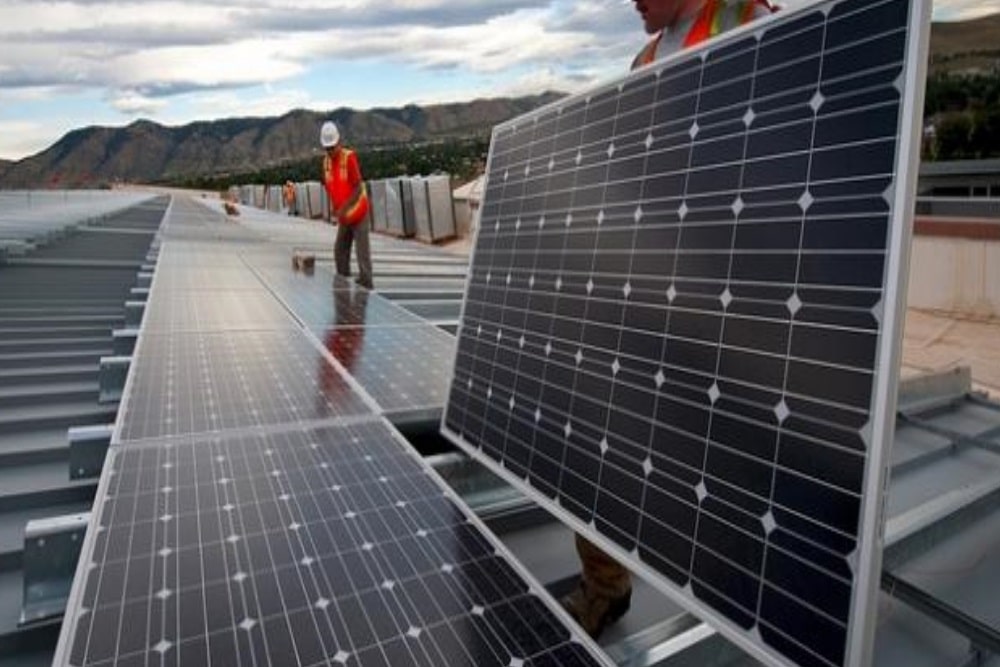
AL Emtyaz Facilities Management provides professional solar panel installation in Amman for homes, businesses, and commercial properties. We help property owners and companies make use of solar energy through the planning, installation, and maintenance of solar photovoltaic (PV) systems designed according to their electricity consumption and site requirements.
As part of our comprehensive solar panel services in Amman and Jordan, we offer solar system installation for residential buildings, offices, factories, warehouses, and other facilities. Our services include site assessment, solar panel selection, mounting structures, inverter installation, electrical connections, system testing, and maintenance arrangements.
Installing a solar energy system in Jordan can help reduce dependence on purchased grid electricity and manage long-term electricity expenses. The actual savings depend on electricity consumption, system capacity, solar production, applicable tariffs, and the approved grid connection arrangement.
Whether you are considering rooftop solar panels for your home or a larger commercial solar installation, AL Emtyaz can help you evaluate the available options, select suitable equipment, and plan the installation according to your property’s requirements.
Looking for a solar panel installation company in Amman? Contact AL Emtyaz at 0792240050 to discuss your electricity consumption, request information about solar panel installation costs, and arrange an assessment for your home or business.
You can also contact our team directly through WhatsApp:
Solar Panel Installation Services for Homes and Businesses in Amman
Professional solar panel installation involves more than placing photovoltaic modules on a roof. An effective solar power system requires suitable equipment, correct electrical design, secure mounting, appropriate system capacity, and proper installation procedures.
At AL Emtyaz, we consider the property’s electricity requirements and installation conditions before recommending a suitable solar energy solution.
Important factors include the available roof space, surrounding shade, roof condition, electricity consumption, panel orientation, inverter requirements, and whether battery storage is needed.
Our solar panel installation services in Amman address the requirements of residential and commercial properties, including rooftop solar PV systems and other suitable mounting arrangements.
Residential Solar Panel Installation
Residential solar panel installation allows homeowners to generate electricity from sunlight and use it to help meet household energy needs.
A properly designed home solar system may contribute to reducing electricity purchased from the grid, depending on the building’s energy consumption and the applicable connection arrangements.
We assess roof conditions, available installation space, and household electricity requirements before discussing the appropriate system size and components.
Commercial Solar Panel Installation
Businesses often consume significant amounts of electricity during daytime operating hours, making solar energy an option worth evaluating for commercial properties.
Our commercial solar panel installation services cover offices, shops, warehouses, factories, and other business facilities requiring solar electricity generation.
System capacity and design are considered in relation to the company’s energy consumption, available space, electrical infrastructure, and the applicable connection requirements.
How Do Solar Panels Generate Electricity?
Solar panels use photovoltaic (PV) technology to convert sunlight into electrical energy. Each panel contains numerous solar cells, most commonly made from specially processed silicon semiconductor materials.
When sunlight reaches the photovoltaic cells, photons transfer energy to electrons within the semiconductor, producing an electrical current through the photovoltaic effect.
The electricity generated by solar panels is direct current (DC). A solar inverter converts this electricity into alternating current (AC), which is used by most household appliances, commercial equipment, and building electrical systems.
Solar panels can generate electricity in cloudy conditions because they also respond to diffuse sunlight. However, electricity production generally decreases when sunlight is weaker or when panels are shaded.
The amount of electricity produced depends on panel capacity, solar radiation, temperature, shading, installation angle, and system efficiency.
For this reason, professional solar system design considers actual site conditions rather than estimating electricity generation from panel numbers alone.
Types of Solar Panels Used in Solar Energy Systems
Different types of photovoltaic modules are available for residential and commercial solar installations. Two well-known categories are monocrystalline solar panels and polycrystalline solar panels.
Both convert sunlight into electricity, but they differ in their silicon structure, manufacturing methods, appearance, and typical efficiency characteristics.
1. Polycrystalline Solar Panels (Poly Solar Panels)
Polycrystalline solar panels are made from silicon material containing multiple crystal structures. They are traditionally recognized by their bluish appearance and visible crystalline pattern.
Polycrystalline modules have historically offered a lower-cost option than comparable monocrystalline modules, although their typical conversion efficiency is also lower.
They have been used in residential and commercial photovoltaic installations where suitable equipment is available and the system design allows sufficient installation space.
However, solar technology has developed considerably, and the suitability and cost of polycrystalline panels should be compared with currently available alternatives rather than relying on older efficiency figures.
2. Monocrystalline Solar Panels (Mono Solar Panels)
Monocrystalline solar panels are manufactured from silicon with a single crystal structure. They are widely used in modern rooftop solar installations because of their efficiency and suitability for different applications.
Monocrystalline modules generally provide higher electricity conversion efficiency than traditional polycrystalline modules, allowing more generating capacity to be installed within a given roof area when comparing suitable products.
The panels are often recognized by their dark appearance, although the appearance varies according to the cell technology and module design.
Modern monocrystalline products are available with different power ratings, construction features, efficiency levels, and manufacturer warranties.
At AL Emtyaz, we consider the available roof space, required output, product specifications, and project budget when selecting suitable solar panels.
Which Type of Solar Panel Is Better?
For many new installations, modern monocrystalline modules are a practical option because of their efficiency and widespread availability.
However, the best choice depends on the actual products being compared, their price, efficiency, warranty conditions, available space, and expected energy production.
Our team assesses these factors when recommending solar panels for homes and businesses in Jordan.
Main Components of a Solar Power System
A complete solar photovoltaic system consists of several components working together to generate, convert, distribute, and monitor electricity.
The components required vary depending on whether the installation is grid-connected, hybrid, or off-grid.
1. Solar Photovoltaic Panels
Solar panels capture sunlight and convert it into direct-current electricity. Their rated power output helps determine the overall generating capacity of the photovoltaic array.
The number of panels required is calculated according to energy consumption, available space, module specifications, and the proposed system design.
2. Solar Panel Mounting Structures
Mounting structures support the solar panels and hold them securely in the required position.
Depending on the project, mounting systems may use appropriate aluminum, galvanized steel, or other engineered structural components.
The structure must be designed for the roof conditions, panel arrangement, relevant structural loads, and expected wind exposure.
3. Solar Inverter
The solar inverter converts DC electricity from the panels into AC electricity suitable for the building’s electrical system.
The inverter also supports system operation and monitoring, with available functions depending on the selected model.
Inverter selection considers system capacity, electrical compatibility, operating conditions, and the requirements of the chosen system configuration.
4. Electrical Cables and Protection Equipment
Solar PV installations require suitable electrical cables, connectors, protective devices, disconnecting equipment, and grounding arrangements.
These components are essential for safe operation and must be selected and installed according to the applicable electrical requirements and equipment specifications.
5. Solar Batteries for Energy Storage
Solar battery storage allows compatible systems to store electricity for use at another time, depending on their design and configuration.
Batteries are not required for every solar installation. Conventional grid-connected systems can operate without battery storage, while hybrid and off-grid arrangements may include batteries according to the required functionality.
The battery capacity, inverter compatibility, protection equipment, and backup requirements must be considered when designing a storage system.
6. Solar Energy Monitoring System
Many modern solar inverters provide access to monitoring platforms through a display, mobile application, or web interface.
Depending on the equipment, users can review electricity generation, operating status, historical performance, and system alerts.
Monitoring helps property owners and maintenance teams evaluate how the solar energy system performs over time.
Types of Solar Energy Systems for Homes and Businesses
Before installing solar panels, it is important to select the appropriate system configuration. Different solar power systems are designed for different electricity requirements and operating conditions.
Grid-Tied Solar Power Systems
An on-grid solar system, also called a grid-tied solar PV system, is connected to the public electricity network.
During daylight hours, the solar panels generate electricity that can contribute to the building’s consumption. Electricity may also be supplied from the grid when solar generation is insufficient.
Grid connection, electricity export, metering, and billing arrangements depend on the applicable regulations and the relevant electricity distribution company’s requirements in Jordan.
Standard grid-tied systems generally shut down during grid outages unless designed with approved backup capabilities.
Hybrid Solar Power Systems
A hybrid solar system combines solar electricity generation with compatible energy storage or other supported power sources.
Hybrid systems can help manage when electricity is stored or used, depending on the selected inverter, battery capacity, operating configuration, and applicable grid connection rules.
Where backup functionality is required, the design must include equipment and electrical arrangements that specifically support operation during a power outage.
Off-Grid Solar Power Systems
An off-grid solar system operates independently of the public electricity grid.
These systems may be considered for properties or facilities where grid access is unavailable or impractical.
Off-grid system design requires careful calculation of energy consumption, battery storage, solar generation, and expected periods of reduced sunlight.
At AL Emtyaz, we discuss the advantages and limitations of each configuration to help determine which solar power system is appropriate for the property.
Solar Panel Installation Process: Step-by-Step
Professional rooftop solar panel installation requires technical planning, structural assessment, suitable equipment, and qualified electrical installation.
At AL Emtyaz, the installation process is organized according to the project’s technical conditions and the requirements of the selected solar PV system.
1. Site Inspection and Solar System Planning
The process begins with assessing the proposed installation location.
Rooftops are commonly used for residential and commercial solar panel installations because they may provide suitable space and exposure to sunlight.
During the assessment, we consider the roof’s condition, structural suitability, available area, surrounding shade, and access requirements.
Where rooftop installation is unsuitable, a properly designed ground-mounted system may be considered if adequate space and appropriate site conditions are available.
2. Installation Safety and Worksite Preparation
Before installation begins, the site is prepared according to the work required and relevant safety considerations.
Depending on the roof height and access conditions, this may involve suitable access equipment, scaffolding, fall protection, and arrangements for handling solar panels and mounting components.
Roof work and solar electrical installation should be performed by appropriately qualified personnel using suitable safety procedures.
3. Installing Solar Panel Mounting Structures
The mounting structure is installed according to the approved system layout and the roof’s structural requirements.
The installation angle and orientation are selected to support solar energy production while considering roof geometry, shading, wind loading, and system design.
There is no single ideal mounting angle for every property. The appropriate arrangement depends on the installation location and project objectives.
Mounting components must also be secured in a manner compatible with the roof structure and any existing waterproofing system.
4. Fixing the Solar Panels to the Mounting System
Once the mounting structure has been prepared, the photovoltaic modules are positioned and secured using the specified clamps and fastening components.
Correct mounting helps maintain panel stability and allows the solar array to operate according to the intended design.
The installation team follows the relevant module and mounting manufacturer requirements, including appropriate component positioning and fastening specifications.
5. Solar Panel Wiring and Electrical Connections
After the panels are secured, the electrical installation proceeds according to the solar system design.
Compatible photovoltaic cables and connectors, including suitable MC4-type connector systems where specified, are used to connect the panels and other electrical components.
Proper cable routing, electrical protection, grounding, isolation arrangements, and connector compatibility are important for safe operation.
Electrical connections must be completed and tested by qualified personnel according to applicable requirements. Solar panels can produce hazardous DC voltage when exposed to light, even when the building’s main electrical supply is disconnected.
6. Solar Inverter Installation
The solar inverter is installed in a suitable location selected according to the manufacturer’s instructions, environmental conditions, and electrical design.
Inverters generally require appropriate ventilation and protection from unsuitable heat exposure or other environmental conditions.
Depending on the inverter’s enclosure rating and product specifications, it may be installed in an appropriate indoor or outdoor location.
The installer completes the required connections and configuration according to the selected inverter and system design.
7. Battery Installation and Grid Connection
If the solar installation includes battery storage, compatible batteries and protection equipment are installed according to the approved system configuration.
For grid-connected systems, the installation must meet the relevant utility connection and approval requirements before being placed into authorized operation.
Any required metering, protection, documentation, and connection arrangements are considered according to the applicable procedures in Jordan.
The exact process depends on the selected system, electricity distributor, and current regulatory requirements.
8. System Testing and Commissioning
The final installation stage involves inspecting and testing the completed solar PV system.
The installation team checks relevant electrical connections, protective functions, inverter operation, and system performance according to the commissioning requirements.
Where monitoring equipment is included, the system may also be configured to display electricity generation and other operating information.
Once the required inspections, tests, and approvals are completed, the solar energy system can begin operating according to its approved configuration.
Solar Panel Installation Cost in Amman and Jordan
The cost of solar panel installation in Jordan depends on several factors, including system capacity, solar panel specifications, inverter type, mounting requirements, installation conditions, and whether battery storage is included.
A residential rooftop solar system and a commercial solar installation may have substantially different requirements, even when both use similar photovoltaic technology.
For this reason, the final installation price should be based on the actual system design and equipment requirements rather than a general estimate that does not account for the property.
1. Solar System Capacity
System capacity is usually expressed in kilowatts (kW) or kilowatts-peak (kWp), depending on the context.
A larger photovoltaic array generally requires more panels, mounting materials, and associated electrical equipment.
However, the appropriate system size should be determined from electricity consumption, site conditions, and applicable connection rules rather than simply installing the largest possible number of panels.
2. Type and Quality of Solar Panels
Different solar panel manufacturers offer products with different rated power outputs, efficiency levels, construction features, and warranty conditions.
The selected panel model affects the system’s installed capacity, required roof area, and equipment cost.
3. Solar Inverter Specifications
Inverter pricing varies according to capacity, manufacturer, efficiency, monitoring functions, electrical compatibility, and available features.
Hybrid inverters or systems with additional battery functionality may have different requirements from conventional grid-connected installations.
4. Roof Structure and Installation Requirements
The roof type, height, available space, condition, and structural requirements can influence installation costs.
Some projects require additional mounting structures, engineering assessment, special access equipment, or preparation before panel installation.
5. Battery Storage Requirements
Including solar batteries can increase the initial system cost because additional equipment, storage capacity, electrical protection, and installation work are required.
Battery selection should be based on actual storage needs, compatibility, and the intended operating arrangement.
6. Electrical Connection and Additional Work
Electrical distribution equipment, cable distances, protection devices, metering requirements, and any necessary upgrades can affect the total installation cost.
Connection procedures and required approvals may also affect project planning, depending on the electricity distributor and applicable rules.
How Can You Get a Solar Panel Installation Quote?
To request an estimate for solar panel installation in Amman, provide information about your property, recent electricity consumption, available installation space, and whether you are interested in battery storage.
Our team can review the basic requirements, explain the available options, and discuss the next steps for a suitable site assessment.
Call 0792240050 to discuss the installation cost for your home or business.
Benefits of Installing Solar Panels in Jordan
Installing solar panels can provide practical advantages for residential and commercial properties when the system is properly designed and matched to actual electricity requirements.
1. Reduce Purchased Electricity
A solar photovoltaic system generates electricity from sunlight, allowing the property to use solar energy when production and consumption occur at suitable times.
This can reduce the amount of electricity purchased from the grid, depending on the system’s configuration and operating conditions.
2. Better Long-Term Energy Planning
A properly designed solar installation can contribute to managing long-term electricity expenses and improving visibility into a property’s energy use.
Actual financial benefits vary according to installation cost, system production, maintenance, tariffs, and the applicable electricity billing arrangement.
3. Make Use of Renewable Solar Energy
Solar panels generate electricity from sunlight without burning fuel at the point of electricity generation.
Using solar electricity can reduce reliance on electricity generated from fossil fuels and contribute to broader renewable energy goals.
4. Suitable for Different Property Types
Solar PV systems can be designed for homes, apartment buildings, offices, warehouses, factories, and other properties with suitable installation conditions.
The system is selected according to the available area, electrical infrastructure, expected energy production, and operational requirements.
5. Low Routine Maintenance Requirements
Solar photovoltaic panels have no moving mechanical parts and generally require relatively limited routine maintenance compared with many other electricity-generating technologies.
Nevertheless, panel cleaning, visual inspections, monitoring, and periodic checks of electrical components remain important for safe and reliable performance.
Solar Panel Maintenance and Cleaning After Installation
After solar panel installation, regular inspection and appropriate maintenance help keep the system operating safely and efficiently.
Although solar panels have no moving mechanical parts, their surfaces can accumulate dust and dirt, while inverters, cables, connectors, and mounting structures require suitable inspection over time.
AL Emtyaz can discuss maintenance arrangements and applicable warranty conditions according to the equipment and installation contract.
1. Solar Panel Cleaning
Dust, sand, bird droppings, and other debris can reduce the amount of sunlight reaching solar cells and may affect electricity production.
Appropriate solar panel cleaning helps remove surface contamination while protecting the panel glass, coatings, and electrical components.
Cleaning methods should follow the panel manufacturer’s instructions. Unsuitable chemicals, abrasive materials, high-pressure washing, or sudden temperature changes may damage the panels.
For rooftop arrays or difficult-to-access installations, professional cleaning is recommended rather than attempting unsafe work at height.
2. Solar Inverter Inspection
The inverter is an important component of a solar PV system and should be monitored for operating alerts, unusual conditions, or performance problems.
Periodic checks should follow the manufacturer’s maintenance requirements, including suitable ventilation and the condition of accessible external surfaces.
3. Mounting Structure and Electrical System Checks
Solar panel mounting structures, cables, connectors, and protection equipment may require periodic inspections.
Qualified personnel can assess the relevant components for signs of deterioration, damage, unsuitable connections, or other issues that may affect safe operation.
4. Monitoring Electricity Production
Many solar power systems provide monitoring information through an inverter display or a mobile application.
Reviewing energy production over time can help identify unexpected changes in system performance.
Because solar output varies with sunlight, temperature, weather, and seasonal conditions, performance should be evaluated using appropriate comparisons rather than assuming every day will produce the same amount of electricity.
5. Warranty and Periodic Maintenance
Solar equipment may be supplied with different manufacturer warranties covering specific components, product defects, or defined performance conditions.
Installation workmanship and maintenance arrangements may also be addressed separately in the service agreement.
Before arranging maintenance or cleaning, property owners should review the relevant warranty terms and follow the equipment manufacturer’s requirements.
AL Emtyaz can explain the maintenance options associated with the proposed solar installation and discuss suitable inspection arrangements.
Why Choose AL Emtyaz for Solar Panel Installation in Amman?
Choosing a suitable solar panel installation company in Amman requires attention to technical planning, equipment specifications, installation quality, and the support available after installation.
AL Emtyaz focuses on helping homeowners and businesses select practical solar energy solutions according to their building and electricity requirements.
- Residential and commercial installations: Solar panel solutions for homes, offices, businesses, and other suitable facilities.
- Site-based system planning: Assessment of available space, roof conditions, shading, and electricity consumption.
- Suitable solar equipment: Selection of panels, inverters, mounting components, and other equipment according to the project requirements.
- Organized installation: Attention to mounting structures, electrical connections, system protection, and commissioning requirements.
- System configuration options: Assessment of grid-connected, hybrid, and off-grid systems according to their suitability and applicable requirements.
- Maintenance support: Discussion of cleaning, periodic inspections, monitoring, and equipment warranty conditions.
- Project-based quotations: Installation prices based on system capacity, equipment selection, and actual site requirements.
Our objective is to provide an organized solar PV installation service that takes into account both the immediate installation requirements and the long-term operation of the solar energy system.
Solar Panel Installation in Amman and Other Areas of Jordan
AL Emtyaz provides solar panel installation services in Amman and handles inquiries for solar energy projects in other locations across Jordan.
Our services can be discussed for residential rooftops, villas, commercial buildings, offices, warehouses, and industrial properties requiring solar electricity generation.
Whether you are planning a new installation or exploring the possibility of adding solar panels to an existing property, our team can review the basic requirements and confirm the available service arrangements.
Project availability, installation scheduling, and technical requirements depend on the location, property conditions, selected system, and applicable approvals.
Frequently Asked Questions About Solar Panel Installation in Amman
How much does solar panel installation cost in Amman?
The cost depends on the system capacity, number and type of panels, inverter, mounting requirements, electrical equipment, and whether battery storage is included. Contact AL Emtyaz for a quotation based on your property’s electricity requirements and installation conditions.
How many solar panels do I need for my home?
The number of solar panels depends on your electricity consumption, the power rating of the selected panels, available roof space, expected sunlight, and the applicable grid connection arrangements. A system assessment is needed to determine a suitable configuration.
Can solar panels reduce my electricity bill in Jordan?
Solar panels can reduce electricity purchased from the grid when their generation is used to meet part of the property’s consumption. Actual bill savings depend on the system design, consumption patterns, electricity tariffs, and applicable connection or billing rules.
Which solar panels are better, monocrystalline or polycrystalline?
Modern monocrystalline panels generally offer higher efficiency than traditional polycrystalline panels and are widely used for new installations. However, the choice should be based on the specific panel models, available area, project budget, and expected performance.
Can solar panels generate electricity on cloudy days?
Yes. Solar panels can generate electricity using diffuse sunlight, although output is usually lower than under strong sunlight. Actual generation depends on weather conditions, panel specifications, and system configuration.
Do I need batteries with my solar panel system?
Not necessarily. Many grid-connected solar systems operate without batteries. Battery storage may be considered for compatible hybrid systems, backup requirements, or off-grid installations, depending on the intended use and system design.
Can solar panels be installed on any roof?
Not every roof is suitable for solar panel installation without assessment or additional work. The roof’s structural condition, usable area, orientation, shading, waterproofing, and accessibility should be evaluated before installation.
How long does solar panel installation take?
Installation time depends on the system size, roof conditions, mounting design, electrical work, and any required grid connection approvals. The schedule should be established after the project requirements have been assessed.
Do solar panels require regular maintenance?
Solar panels generally require relatively limited routine maintenance, but periodic inspection, suitable cleaning, monitoring, and electrical checks are important. Maintenance requirements depend on the equipment and manufacturer recommendations.
How long do solar panels last?
Many solar panels are designed for long operating lifetimes, and manufacturer performance warranties commonly extend over several decades. Actual service life depends on product quality, environmental conditions, installation, and maintenance. Product warranties and performance warranties should be reviewed separately.
Can I install solar panels for my business in Amman?
Yes. Commercial solar panel systems can be designed for suitable offices, shops, warehouses, factories, and other business properties. The appropriate capacity and connection arrangement depend on electricity consumption, building conditions, and applicable requirements.
Does solar panel installation require approval in Jordan?
Grid-connected solar installations are subject to applicable regulatory and electricity distribution company requirements. The necessary procedures depend on the system and connection arrangement. These requirements should be confirmed during project planning before the installation is connected to the grid.
Contact AL Emtyaz for Solar Panel Installation in Amman and Jordan
Installing solar panels is an important investment that requires suitable equipment, careful planning, and proper installation according to the property’s technical and electrical requirements.
AL Emtyaz Facilities Management provides professional solar panel installation in Amman for homes and businesses, including residential rooftop solar systems, commercial solar PV installation, inverter installation, mounting structures, system commissioning, and maintenance arrangements.
Whether you want to reduce purchased electricity, explore renewable energy for your business, or install a new solar power system for your home, our team can discuss the available options and help determine an appropriate project scope.
Call AL Emtyaz today at 0792240050 to request a solar panel installation quotation, discuss system capacity and equipment, or arrange an assessment for your property in Amman or another available service area in Jordan.
You can also send your solar panel installation inquiry directly through WhatsApp using the button below:
