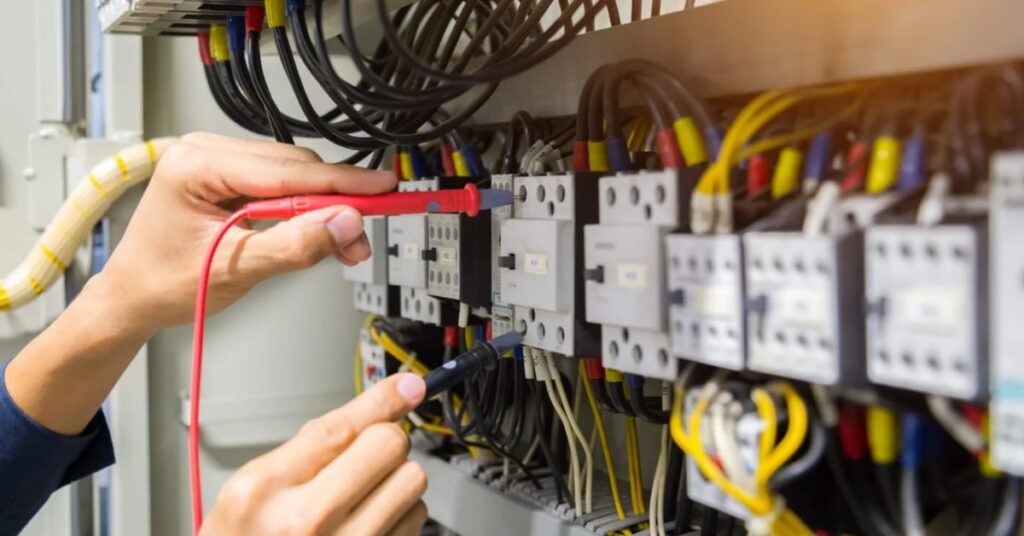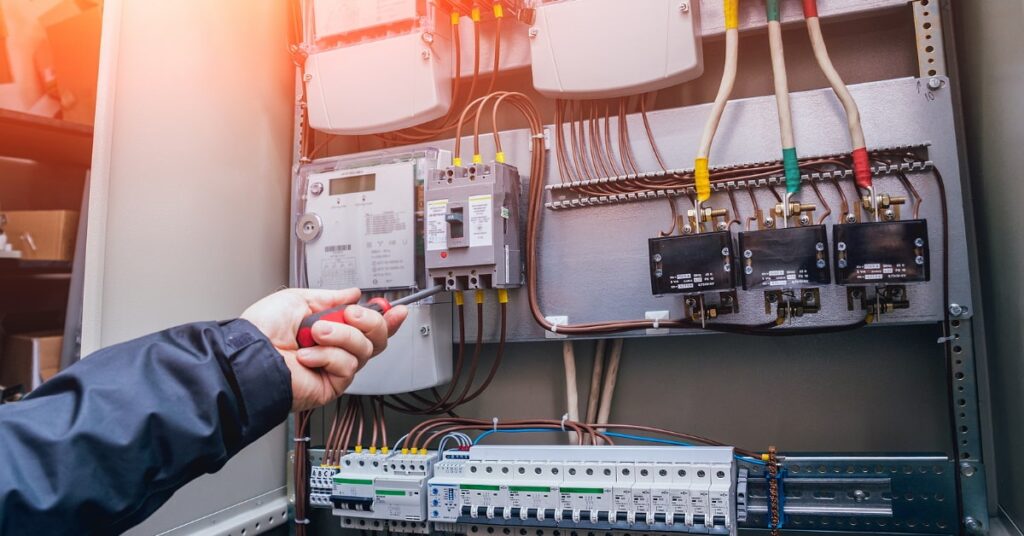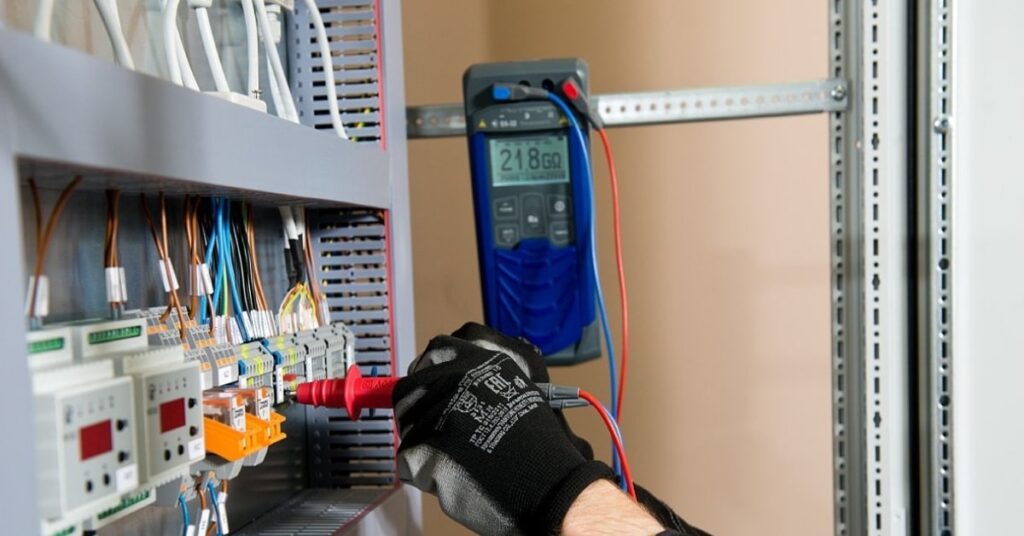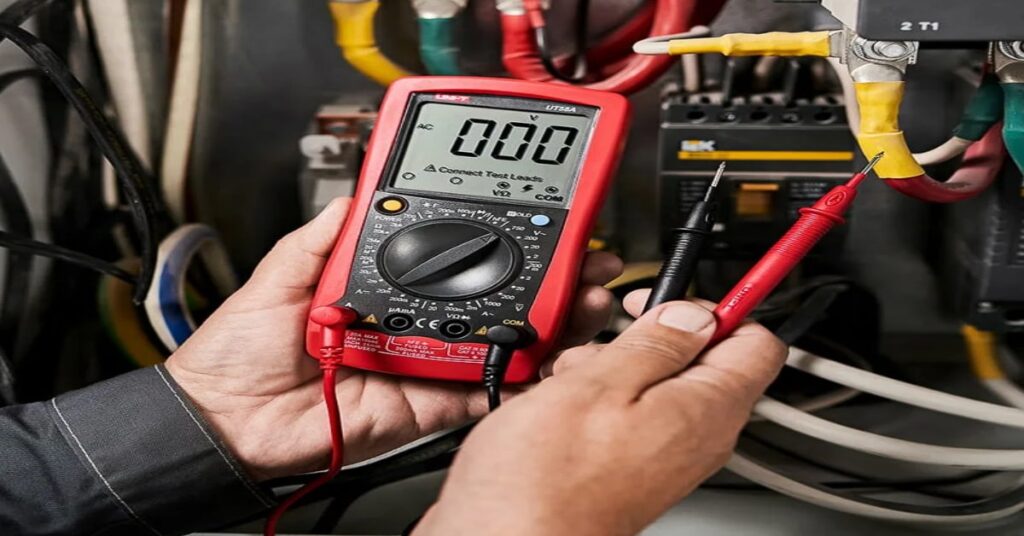
Finding electrical cables hidden inside walls, floors, and ceilings can be challenging without the right equipment. An electrical wire detector for walls helps electricians, maintenance technicians, and contractors trace concealed wiring, identify cable routes, and investigate certain electrical faults without unnecessary drilling or demolition.
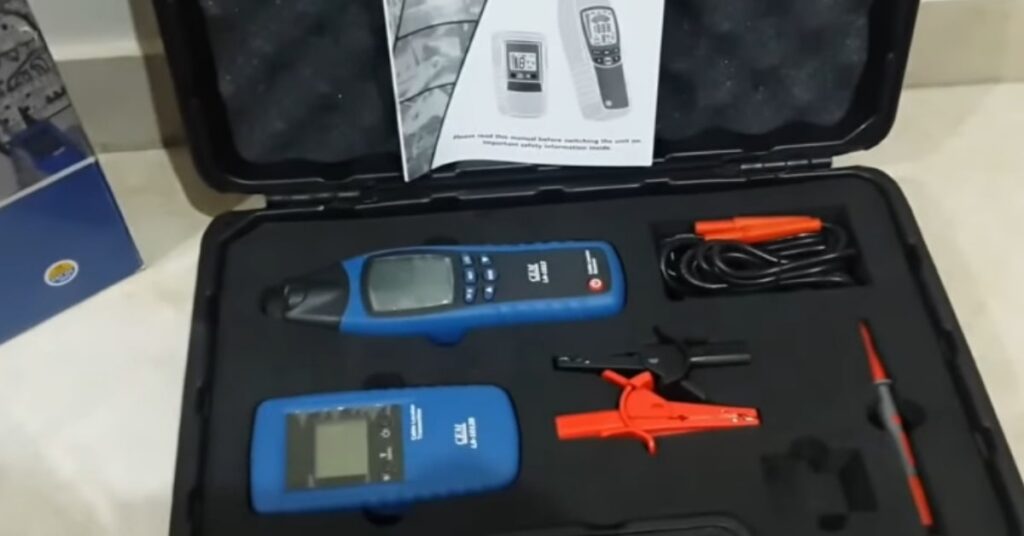
AL Emtyaz offers an electrical cable tracer for sale in Jordan, designed for locating hidden electrical wiring in residential, commercial, and other building environments. The device consists of a transmitter and receiver, along with connection leads and testing accessories used for appropriate cable tracing applications.
For customers who also require professional electrical inspection, installation, or repairs, AL Emtyaz provides Electrical Services in Jordan, including assistance with electrical wiring faults, residential electrical maintenance, and related installation work.
The hidden wire detector is intended to help locate cable pathways behind finished surfaces and assist with troubleshooting problems such as interrupted wiring and certain short-circuit conditions. The original product description also specifies a tracing depth of up to 2.5 meters under suitable conditions; actual performance must be confirmed against the exact device model, technical specifications, and operating environment.
Whether you need a wall wire detector in Amman, a cable tracing tool for electrical maintenance, or information about an underground cable locator, contact AL Emtyaz to discuss the available device and its suitability for your work.
To buy an electrical wire detector in Jordan or request product details, call 0798495491.
You can also contact our team directly through WhatsApp:
Electrical Wire Detector for Walls – Main Features and Applications
An electrical wire detector, also known as an electrical cable tracer or wire locator, is a useful tool for identifying the route of wiring that is concealed inside walls or other building structures.
In many electrical maintenance projects, cables are hidden beneath plaster, inside conduits, behind wall finishes, or below flooring. Without suitable tracing equipment, locating the relevant wiring may require unnecessary investigation and additional work.
The device offered by AL Emtyaz uses a transmitter-and-receiver arrangement to support electrical cable tracing. This allows technicians to follow a detectable signal associated with the target cable and identify its approximate route.
Its main intended applications include:
- Hidden electrical wire detection: Tracing suitable cables concealed behind walls and other building surfaces.
- Electrical cable tracing: Following the route of a cable through accessible parts of an installation.
- Broken wire location: Helping investigate possible interruptions in electrical cables.
- Short-circuit troubleshooting: Assisting qualified technicians in identifying selected cable fault conditions.
- Underground cable tracing: Locating suitable buried cable routes where the device’s specifications and site conditions permit.
- Building renovations: Identifying existing wiring routes before planning changes to electrical installations.
- Electrical maintenance: Supporting fault diagnosis and investigation of existing electrical circuits.
Detection accuracy and supported applications depend on the exact instrument, cable type, circuit conditions, surrounding construction materials, and correct operating procedure.
Components of the Electrical Cable Tracing Device
The electrical wire tracing device offered by AL Emtyaz is described as a kit consisting of two main units: a transmitter and a receiver. It also includes connection accessories used for the supported tracing operations.
Each component has a different function in the cable detection process.
1. Signal Transmitter
The wire tracer transmitter is used to introduce or generate a detectable tracing signal associated with the electrical conductor being investigated.
This signal allows a compatible receiver to detect the cable route when the instrument is configured correctly and the signal can be detected through the surrounding materials.
The connection method varies according to the instrument’s design, the electrical circuit, and whether the application involves energized or de-energized wiring.
Connections must only be made within the equipment’s specified electrical ratings and by personnel qualified for the relevant electrical work.
2. Signal Receiver
The wire tracer receiver detects the tracing signal associated with the target conductor.
By observing the receiver’s response while checking the suspected cable route, a technician can gather information about the location and direction of the concealed wiring.
Depending on the device model, the receiver may provide visual indications, signal strength information, or audible feedback to assist the tracing process.
The receiver’s readings help guide the investigation, but they should not be treated as an absolute guarantee of cable position or electrical safety.
3. Test Leads and Connection Accessories
The kit also includes electrical connection accessories such as test leads, probes, and clips.
These accessories support the connection of the transmitter for compatible cable tracing applications.
Their use depends on the instrument’s specified procedures and electrical ratings. They should not automatically be treated as voltage, current, or resistance measuring accessories unless those functions are explicitly supported by the device’s technical documentation.
Before ordering, customers can contact AL Emtyaz to confirm the included accessories and the available product specifications.
How Does an Electrical Wire Detector Work?
A transmitter and receiver wire tracer operates by creating and detecting a signal associated with a conductor.
The transmitter generates the tracing signal, while the receiver detects the resulting signal as the technician investigates the cable’s route.
This technology can be useful when a wire runs inside a wall, beneath a floor, through a ceiling, or within part of an electrical installation that cannot be inspected visually.
Unlike simple tools designed primarily to detect nearby metal objects, a dedicated cable tracer can help follow a particular electrical conductor when the tracing method and circuit conditions allow it.
Some professional wire tracing systems also provide functions for investigating broken conductors, identifying circuits, or helping locate short circuits.
The exact capabilities of the device offered for sale should be confirmed against its model-specific specifications before it is used for a particular troubleshooting task.
Detecting Electrical Wires Hidden Inside Walls
One of the primary uses of an in-wall electrical wire detector is to help locate concealed wiring behind finished surfaces.
Electrical cables are frequently installed within conduits or concealed beneath plaster, drywall, and other building materials. Their routes may not be obvious during renovations or maintenance.
A suitable cable tracing device can help technicians investigate these routes without immediately removing sections of the finished surface.
Locating Wiring Before Renovation Work
During renovation projects, identifying existing electrical wiring helps contractors plan the work and avoid unnecessary damage to concealed services.
A wall cable detector can assist with preliminary investigations before installing new electrical points, modifying walls, or carrying out other building work.
However, no electronic detector should be relied upon as the sole confirmation that a wall is safe to drill. Additional verification and appropriate isolation procedures remain necessary.
Tracing Cables Through Floors and Ceilings
Electrical cables may also run beneath flooring or through ceiling spaces, making their routes difficult to identify.
Where supported by the instrument, signal tracing helps technicians investigate these concealed cable paths during maintenance, renovation, and electrical installation work.
Actual detection performance varies with the depth of the cable and the composition of the surrounding material.
Reducing Unnecessary Wall Opening
A useful advantage of professional cable tracing is the ability to narrow down the area requiring inspection.
When a cable route can be traced successfully, a technician may be able to reduce unnecessary wall opening, drilling, or other investigative work.
This can help save time and reduce disruption during certain electrical maintenance projects.
Electrical Cable Fault Detection and Troubleshooting
Electrical faults can occur when a conductor becomes damaged, a connection fails, or an electrical circuit develops an abnormal condition.
A suitable electrical cable fault locator can assist technicians in investigating certain wiring problems, particularly where cables are concealed inside walls or other structures.
Locating Broken or Interrupted Wires
A broken electrical conductor can interrupt the supply to an outlet, lighting fixture, or other connected equipment.
With a compatible tracing instrument and the appropriate procedure, technicians may be able to identify the route of the affected cable and narrow down the location of an interruption.
This can help reduce the amount of exploratory work required when investigating concealed wiring faults.
Investigating Electrical Short Circuits
A short circuit occurs when electrical current flows through an unintended low-resistance path.
Some professional wire tracing devices include specialized functions for investigating short-circuit conditions and locating affected sections of a cable.
The ability to perform this task depends on the specific instrument, circuit configuration, and prescribed testing method.
Electrical faults involving damaged insulation, short circuits, or exposed conductors should be assessed by qualified personnel using appropriate safety procedures.
Supporting Electrical Maintenance Work
Cable tracing can support electrical technicians when identifying existing wiring routes, investigating circuit connections, or planning repairs.
The device is a diagnostic aid rather than a replacement for appropriate electrical testing, circuit verification, and professional fault assessment.
Electrical Cable Detection Depth and Underground Wire Tracing
The original description of the electrical wire detector available from AL Emtyaz states a cable tracing depth of up to 2.5 meters in suitable applications.
This should be understood as an advertised maximum rather than a guaranteed detection depth for every wall, floor, or underground installation.
Actual tracing depth can vary according to:
- The exact cable tracing device and its technical specifications.
- The type, size, and condition of the cable being traced.
- The strength and configuration of the transmitted signal.
- The depth of the conductor beneath the surface.
- The presence of metallic conduits or other shielding materials.
- The composition and moisture content of the surrounding wall or soil.
- Nearby electrical cables and other possible sources of interference.
For customers requiring an underground electrical cable locator in Jordan, it is important to confirm that the exact device supports the intended tracing depth and application.
Contact AL Emtyaz to request the available product information before purchasing the device for deep cable tracing or underground work.
Can the Electrical Wire Detector Be Used on Live Circuits?
Some professional electrical cable tracers are designed to operate with energized circuits, while others are intended for de-energized circuits or have different modes for specific electrical conditions.
The Arabic product description refers to the possibility of connecting the transmitter to an energized electrical outlet. However, live-circuit compatibility must be confirmed from the exact model’s manufacturer instructions, voltage limits, and electrical safety rating.
Never assume that a cable tracing transmitter is safe to connect directly to a live socket or exposed conductor merely because it has test leads.
Any connection to energized electrical equipment must be performed only when the device is specifically rated for that application and the work is carried out by appropriately qualified personnel.
Where required, the circuit should be isolated and verified using suitable electrical testing equipment before work begins.
Using the correct operating procedure is essential for both personal safety and reliable cable tracing results.
Main Applications of an Electrical Wire Tracer
An electrical wire tracing tool can support a variety of construction, renovation, and electrical maintenance activities.
Its usefulness depends on whether the device has the necessary tracing functions and electrical ratings for the intended application.
1. Home Renovation and Electrical Remodeling
During home renovations, electricians often need to identify existing wiring before relocating outlets, installing new lighting, or modifying concealed electrical circuits.
A hidden electrical wire detector can assist with finding cable routes and planning the necessary work.
2. New Building Construction
In new construction projects, cable tracing equipment may help verify selected wiring routes and support inspection before finishes are completed.
It can also be useful when technicians need to identify a particular cable among several installed conductors.
3. Electrical Maintenance and Inspections
Maintenance teams use cable tracing tools to investigate electrical circuits, locate concealed cable routes, and support fault diagnosis.
These tools may help reduce the time required to identify the section of an installation that needs further testing.
4. Commercial and Industrial Electrical Work
Commercial buildings, workshops, and industrial facilities can contain extensive electrical cable networks.
A compatible professional wire tracer can help technicians investigate suitable circuits during installation changes, maintenance, and troubleshooting.
The instrument’s electrical measurement category and operating limits must be appropriate for the specific environment.
5. Hospitals and Laboratory Facilities
Hospitals and laboratories may require detailed electrical maintenance planning because their equipment and installations can have specialized operational requirements.
Appropriately rated cable tracing tools can assist authorized maintenance teams in identifying wiring routes or investigating selected faults.
Electrical work in these environments must follow the relevant facility procedures and be coordinated by qualified personnel.
6. Electrical Fault Investigation
When a cable fault causes loss of power or other electrical problems, a suitable tracing device can help locate the affected wiring route.
This may support faster diagnosis when used together with appropriate electrical testing methods.
Benefits of Using a Hidden Electrical Wire Detector
Using a dedicated wall wire detector or electrical cable tracer can provide several practical advantages during building maintenance and electrical installation projects.
- Improved cable location: Helps identify suitable wiring routes that are concealed behind walls, ceilings, and floors.
- Less unnecessary demolition: Can reduce exploratory drilling and wall opening when a cable route is successfully traced.
- Support for fault diagnosis: Assists technicians in investigating certain interruptions and short-circuit conditions where the device supports these functions.
- Time savings: Helps narrow down the areas requiring further inspection or maintenance.
- Versatile applications: Suitable cable tracing equipment can be used in residential, commercial, construction, and maintenance environments.
- Better maintenance planning: Helps technicians understand the route of concealed electrical services before modifying an installation.
- Additional information for technicians: Provides a useful tracing signal that can support professional electrical troubleshooting.
These benefits depend on correct device selection and operation. Cable detection tools help identify possible wiring routes, but they do not replace proper electrical isolation, verification, and safe working practices.
How to Use an Electrical Cable Tracer Safely
Using an electrical cable tracer correctly requires an understanding of the instrument, the target circuit, and the manufacturer’s operating instructions.
The following is a general overview of the tracing process. It is not a substitute for the specific device manual or professional training, particularly when electrical circuits may be energized.
Step 1: Inspect the Device and Accessories
Before use, check that the transmitter, receiver, leads, probes, and other required accessories are available and in suitable condition.
Damaged cables, cracked housings, defective connectors, or other visible problems should be addressed before the instrument is used.
Step 2: Identify the Electrical Circuit and Operating Requirements
Determine which cable or circuit requires investigation and review the applicable instrument instructions.
Confirm whether the required tracing method is intended for an energized or de-energized circuit and whether the instrument is rated for the intended electrical conditions.
Any electrical connections must be made by qualified personnel using the manufacturer’s approved procedure.
Step 3: Configure the Transmitter and Receiver
Set up the instrument according to the selected tracing method and its operating instructions.
Some devices provide different signal modes or sensitivity settings. These settings should be chosen according to the target cable and tracing conditions.
Step 4: Trace the Suspected Cable Route
The receiver is used to investigate the suspected route of the target cable while the technician observes its signal indications.
Signal response can help determine the likely direction and location of the wiring.
Results must be interpreted carefully because nearby cables, conductive materials, shielding, and other environmental conditions may affect the reading.
Step 5: Investigate Suspected Fault Locations
Where the instrument supports fault-tracing functions, a qualified technician can use the appropriate procedure to investigate suspected breaks or short circuits.
Findings should be confirmed using suitable electrical testing methods before repairs are carried out.
Step 6: Complete the Inspection and Store the Equipment
After tracing is complete, the instrument should be disconnected, switched off, and stored according to the manufacturer’s instructions.
Keep the transmitter, receiver, and accessories in a suitable dry and protected location to help maintain their condition.
Safety reminder: Never drill into a wall or work on an electrical circuit solely because a cable detector shows no wiring. Appropriate additional checks and safe isolation procedures remain necessary.
Electrical Wire Tracer vs. Wall Scanner: What Is the Difference?
Customers searching for an electrical wire finder in Jordan may encounter different types of detection equipment, including wall scanners, cable tracers, and electrical fault locators.
Although these devices may be used for related tasks, they do not always work in the same way or provide the same capabilities.
| Feature | Electrical Cable Tracer | Wall Scanner or Detector |
|---|---|---|
| Primary Function | Trace a conductor or circuit using a detectable signal | Detect supported objects or materials behind a surface |
| Common Components | Transmitter, receiver and suitable accessories | Handheld scanning unit |
| Tracing Cable Routes | Supported by compatible cable tracing systems | Depends on the scanner’s detection capability |
| Locating Wire Breaks | Possible with models supporting the required fault functions | Not necessarily supported |
| Underground Cable Tracing | Possible with suitable cable locator models | Not a standard feature of all wall scanners |
| Live-Circuit Use | Depends on the model’s safety rating and operating instructions | Depends on the model and detection technology |
| Typical Users | Electricians, contractors and maintenance technicians | Electricians, installers and building maintenance workers |
The transmitter-and-receiver device offered by AL Emtyaz belongs to the electrical cable tracing category described in this comparison.
Before purchasing, explain the intended application so the available product specifications can be reviewed for suitability.
Who Should Buy an Electrical Wire Detector?
A professional electrical cable detector can be useful for individuals and businesses involved in electrical installation, maintenance, and renovation work.
Potential users include:
- Residential electricians: For tracing concealed household wiring and investigating electrical faults.
- Electrical maintenance technicians: For identifying cable routes and supporting circuit troubleshooting.
- Electrical contractors: For use during suitable construction, installation, and renovation projects.
- Building maintenance companies: For investigating electrical systems in managed properties.
- Commercial maintenance teams: For appropriate electrical inspection and maintenance activities.
- Construction professionals: For assisting with the identification of existing electrical services before planned work.
The device’s suitability depends on its specific technical capabilities and the user’s qualifications. Operations involving energized electrical circuits should be restricted to appropriately qualified personnel.
Electrical Wire Detector Price and Availability in Jordan
The price of an electrical wire detector in Jordan depends on the device model, technical specifications, tracing depth, operating modes, included accessories, and supported electrical applications.
Basic wall detectors and professional transmitter-and-receiver cable tracers can differ considerably in price and functionality.
When comparing devices, it is important to review more than the advertised detection depth or product description.
Relevant purchasing considerations include:
- The exact device model and manufacturer.
- Whether the kit includes both a transmitter and receiver.
- The supported cable tracing applications.
- The maximum tracing depth and the conditions under which it applies.
- The supported operating voltage and electrical safety rating.
- The availability of open-circuit and short-circuit tracing functions.
- The included test leads, probes, and other accessories.
- The available warranty and after-sales support.
AL Emtyaz offers an electrical wire tracing device for sale in Jordan. Contact our team to confirm the current price, product availability, technical details, and ordering arrangements.
For pricing and product inquiries, call 0798495491.
Buy an Electrical Cable Tracer in Amman and Jordan
AL Emtyaz receives inquiries from customers looking for electrical wire detectors and cable tracing equipment in Amman and other areas of Jordan.
Whether you are an electrician, electrical contractor, maintenance technician, or property maintenance company, you can contact us for information about the available cable tracing device.
To help confirm that the device meets your requirements, explain whether you need it for concealed wiring, underground cable tracing, broken wire detection, or another electrical maintenance application.
Our team can discuss the available specifications and confirm ordering or delivery arrangements according to your location.
Frequently Asked Questions About Electrical Wire Detectors
What is an electrical wire detector?
An electrical wire detector is a tool used to help locate concealed wiring. A dedicated electrical cable tracer commonly uses a transmitter and receiver to follow a detectable signal associated with a conductor.
Can an electrical wire detector find wires behind walls?
Yes. Suitable cable tracing devices can help identify electrical wiring hidden inside walls. Detection depends on the instrument, cable type, construction materials, depth, and operating conditions.
Is an electrical cable tracer available for sale in Jordan?
AL Emtyaz offers an electrical cable tracing device for sale in Jordan. Contact our team at 0798495491 to confirm current availability, technical specifications, and ordering details.
How deep can the wire detector trace electrical cables?
The original product description specifies an advertised tracing depth of up to 2.5 meters under suitable conditions. This figure must be verified against the exact model’s specifications. Actual depth varies according to the cable, transmitted signal, surrounding materials, and site conditions.
Can the device locate broken electrical wires?
Some transmitter-and-receiver cable tracers can assist in locating wire interruptions using compatible fault-tracing methods. Confirm that the exact device supports broken-wire detection before purchasing it for this purpose.
Can it detect short circuits?
Selected professional cable tracing systems offer functions for investigating short circuits. The supported fault types and testing procedures depend on the device model and electrical circuit conditions.
Can this wire detector be connected to a live electrical outlet?
Live-circuit operation is only appropriate when the exact device is specifically designed and rated for that application. Do not connect the transmitter to an energized outlet without verifying the manufacturer’s instructions and required electrical safety ratings. Such work should be performed by qualified personnel.
Is a cable tracer the same as a wall scanner?
Not necessarily. A wall scanner generally detects supported objects or materials behind a surface, while a cable tracer uses a transmitted or detectable signal to help follow the route of an electrical conductor. Available functions vary between products.
Can I use an electrical wire detector before drilling?
A suitable detector can assist with identifying possible concealed wiring before planned construction work. However, a negative reading does not prove that an area is free of electrical cables. Additional checks and proper electrical isolation are required before drilling or cutting into surfaces where hidden services may be present.
Can the device trace underground electrical cables?
Professional cable locators may support underground cable tracing, but their capabilities vary. Confirm the exact device’s approved applications and maximum tracing depth before using it for underground work.
What accessories are included with the electrical cable tracer?
The product description identifies a transmitter, receiver, connection leads, probes, and clips. Contact AL Emtyaz to confirm the exact contents of the available product package.
What is the price of an electrical wire detector in Amman?
The price depends on the exact device model and included specifications. Contact AL Emtyaz for the current selling price, available accessories, and ordering information.
Who can benefit from using an electrical cable tracing device?
Electrical contractors, qualified electricians, maintenance technicians, and building maintenance teams may benefit from using suitable cable tracing equipment for wiring investigations and electrical fault diagnosis.
How can I order the electrical wire detector in Jordan?
Contact AL Emtyaz by phone or WhatsApp, explain the intended application, and request the available product specifications, price, and ordering details.
Contact AL Emtyaz to Order an Electrical Wire Detector in Jordan
Locating concealed electrical cables is an important part of many installation, renovation, and maintenance projects. A suitable electrical wire detector for walls can help technicians investigate wiring routes and support certain electrical fault-tracing tasks.
AL Emtyaz offers an electrical cable tracer for sale in Jordan, featuring a transmitter-and-receiver system with connection accessories for supported cable tracing applications.
The device may be useful for electricians, contractors, and maintenance teams working on suitable residential, commercial, and construction projects.
Before ordering, contact us to confirm the exact model, current price, tracing depth, electrical ratings, included accessories, and compatibility with your intended application.
Call AL Emtyaz at 0798495491 to inquire about the electrical wire detector, request technical information, or discuss ordering arrangements in Amman and Jordan.
You can also send your inquiry directly through WhatsApp using the button below: